
Physiological, anatomical and biochemical characterisation of photosynthetic types in genus Cleome (Cleomaceae)
Elena V. Voznesenskaya A , Nuria K. Koteyeva A , Simon D. X. Chuong B , Alexandra N. Ivanova A , João Barroca C , Lyndley A. Craven D and Gerald E. Edwards C EA Laboratory of Anatomy and Morphology, V. L. Komarov Botanical Institute of Russian Academy of Sciences, Prof. Popov Street 2, 197376, St Petersburg, Russia.
B Department of Biology, University of Waterloo, Waterloo, Ontario N2L 3G1, Canada.
C School of Biological Sciences, Washington State University, Pullman, WA 99 164-4236, USA.
D Australian National Herbarium, Centre for Plant Biodiversity Research, GPO Box 1600, Canberra, ACT 2601, Australia.
E Corresponding author. Email: edwardsg@wsu.edu
F This paper originates from an International Symposium in Memory of Vincent R. Franceschi, Washington State University, Pullman, Washington, USA, June 2006.
Functional Plant Biology 34(4) 247-267 https://doi.org/10.1071/FP06287
Submitted: 4 November 2006 Accepted: 1 March 2007 Published: 19 April 2007
Abstract
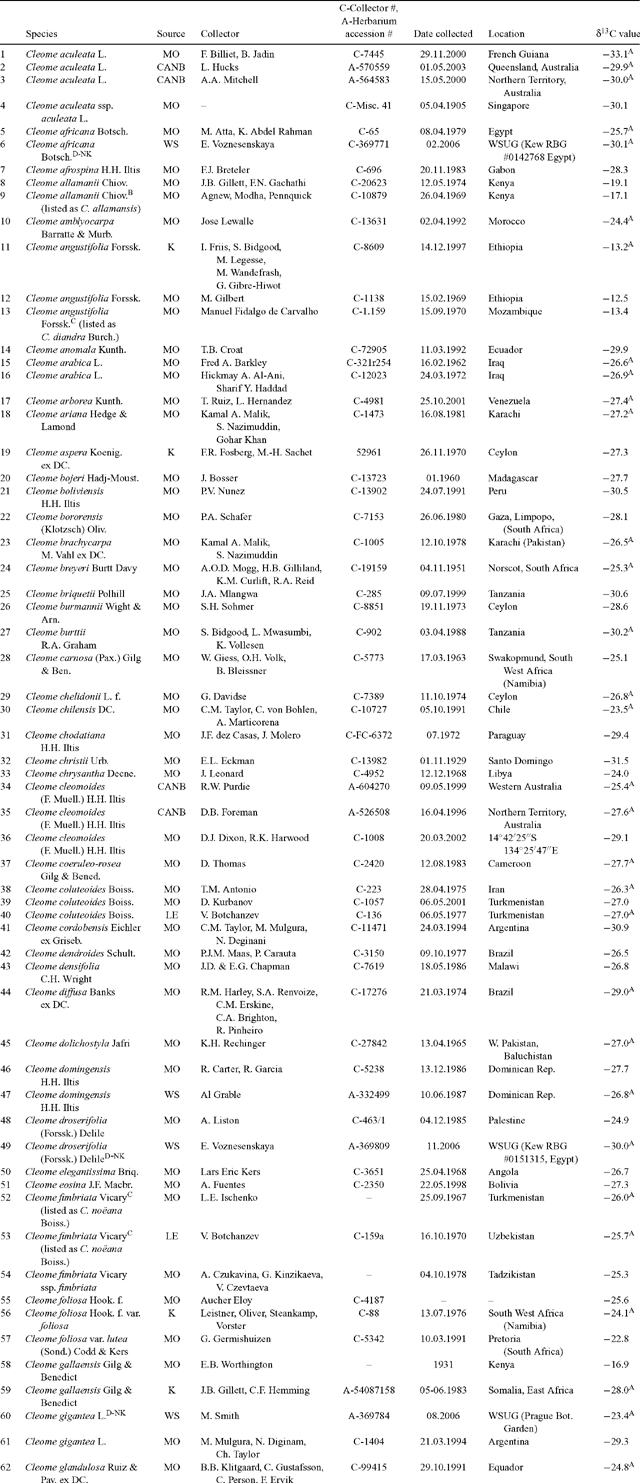
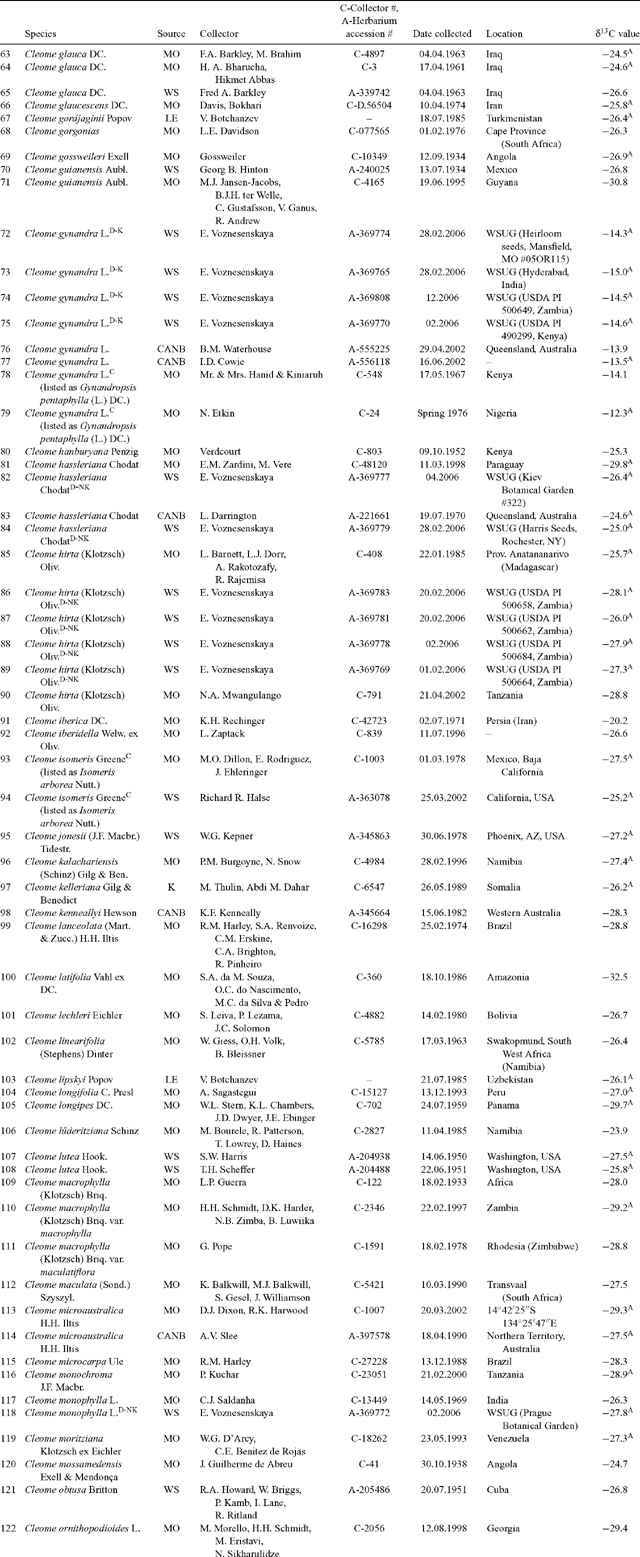
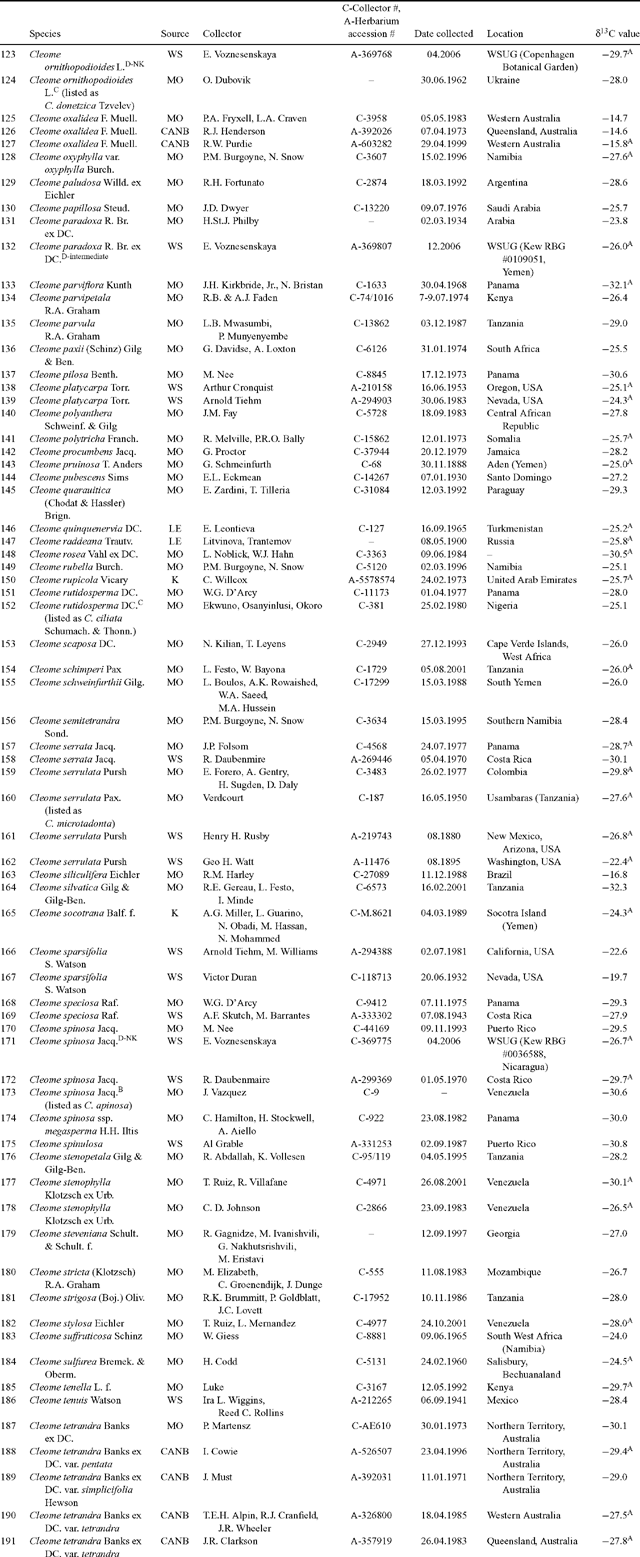
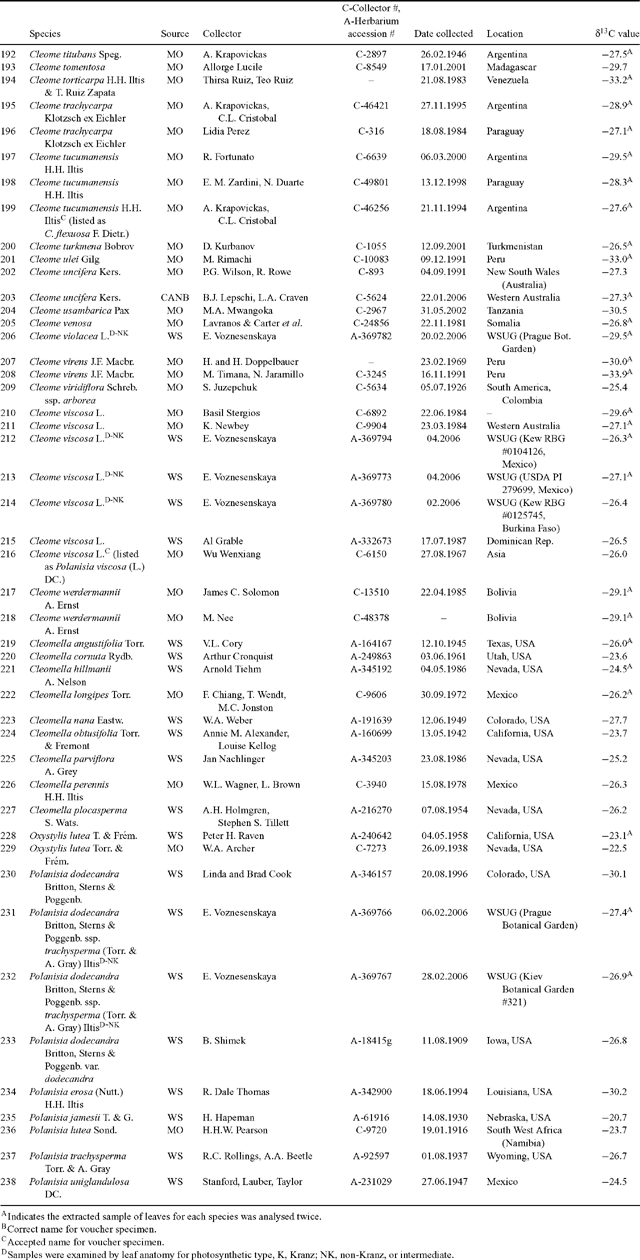
C4 photosynthesis has evolved many times in 18 different families of land plants with great variation in leaf anatomy, ranging from various forms of Kranz anatomy to C4 photosynthesis occurring within a single type of photosynthetic cell. There has been little research on photosynthetic typing in the family Cleomaceae, in which only one C4 species has been identified, Cleome gynandra L. There is recent interest in selecting and developing a C4 species from the family Cleomaceae as a model C4 system, since it is the most closely related to Arabidopsis, a C3 model system (Brown et al. 2005). From screening more than 230 samples of Cleomaceae species, based on a measure of the carbon isotope composition (δ13C) in leaves, we have identified two additional C4 species, C. angustifolia Forssk. (Africa) and C. oxalidea F.Muell. (Australia). Several other species have δ13C values around –17‰ to –19‰, suggesting they are C4-like or intermediate species. Eight species of Cleome were selected for physiological, anatomical and biochemical analyses. These included C. gynandra, a NAD–malic enzyme (NAD–ME) type C4 species, C. paradoxa R.Br., a C3–C4 intermediate species, and 6 others which were characterised as C3 species. Cleome gynandra has C4 features based on low CO2 compensation point (Γ), C4 type δ13C values, Kranz-type leaf anatomy and bundle sheath (BS) ultrastructure, presence of C4 pathway enzymes, and selective immunolocalisation of Rubisco and phosphoenolpyruvate carboxylase. Cleome paradoxa was identified as a C3–C4 intermediate based on its intermediate Γ (27.5 μmol mol–1), ultrastructural features and selective localisation of glycine decarboxylase of the photorespiratory pathway in mitochondria of BS cells. The other six species are C3 plants based on Γ, δ13C values, non-Kranz leaf anatomy, and levels of C4 pathway enzymes (very low or absent) typical of C3 plants. The results indicate that this is an interesting family for studying the genetic basis for C4 photosynthesis and its evolution from C3 species.
Additional keywords: C3 plants, C4 plants, C3–C4 intermediate photosynthesis, chloroplast ultrastructure, immunolocalisation, NAD–ME type, photosynthetic enzymes.
Acknowledgements
The authors acknowledge support of this work by NSF Grants IBN-0131098 and IBN-0236959, NSF Isotope Facility Grant DBI-0116203, and partly by Civilian Research and Development Foundation grants RB1-2502-ST-03 and RUB1-2829-ST-06, and the Russian Foundation of Basic Research grant 05-04-49622. We are very grateful to Prof. H. Iltis for help with identification of plant material and suggestions on the manuscript. We thank Dr A. S. Raghavendra, University of Hyderabad, India, the National Plant Germplasm System, GRIN, and the following Botanical Gardens for providing seeds (Kew Royal Botanic Gardens, Prague, Kiev and Copenhagen Universities), and Herbariums of the Missouri Botanical Garden, Washington State University, the Komarov Botanical Institute, Kew Royal Botanic Gardens and Australian National Herbarium for providing plant samples for carbon isotope analysis. We also thank the Franceschi Microscopy and Imaging Center of Washington State University for use of their facilities and staff assistance and C. Cody for plant growth management.
Bender MM,
Rouhani I,
Vines HM, Black CC
(1973) 13C/12C ratio changes in Crassulacean acid metabolism plants. Plant Physiology 52, 427–430.
| PubMed |

Brooks A, Farquhar GD
(1985) Effect of temperature on the CO2/O2 specificity of ribulose-1,5-bisphosphate carboxylase/oxygenase and the rate of respiration in the light. Planta 165, 397–406.
| Crossref | GoogleScholarGoogle Scholar |
Brown NJ,
Parsley K, Hibberd JH
(2005) The future of C4 research – maize, Flaveria or Cleome? Trends in Plant Science 10, 215–221.
| Crossref | GoogleScholarGoogle Scholar | PubMed |
Cheng S-H,
Moore BD,
Wu J,
Edwards GE, Ku MSB
(1989) Photosynthetic plasticity in Flaveria brownii: growth irradiance and the expression of C4 photosynthesis. Plant Physiology 89, 1129–1135.
| PubMed |
Gamaley YV
(1985) The variations of the Kranz-anatomy in Gobi and Karakum plants. Botanicheskii Zhurnal [In Russian] 70, 1302–1314.
Hall JC,
Sytsma J, Iltis HH
(2002) Phylogeny of Capparaceae and Brassicaceae based on chloroplast sequence data. American Journal of Botany 89, 1826–1842.
Iltis HH
(1960) Studies in the Capparidaceae. VII. Old World Cleomes adventive in the New World. Brittonia 12, 279–294.
| Crossref | GoogleScholarGoogle Scholar |
Imbamba SK, Tieszen LL
(1977) Influence of light and temperature on photosynthesis and transpiration in some C3 and C4 vegetable plants from Kenya. Physiologia Plantarum 39, 311–316.
| Crossref | GoogleScholarGoogle Scholar |
Krenzer EG,
Moss DN, Crookston RK
(1975) Carbon dioxide compensation points of flowering plants. Plant Physiology 56, 194–206.
| PubMed |
Ku MSB,
Edwards G, Tanner CB
(1977) Effects of light, carbon dioxide, and temperature on photosynthesis, oxygen inhibition of photosynthesis, and transpiration in Solanum tuberosum. Plant Physiology 59, 868–872.
| PubMed |
Ku MSB,
Wu J,
Dai Z,
Chu C, Edwards GE
(1991) Photosynthetic and photorespiratory characteristics of Flaveria species. Plant Physiology 96, 518–528.
| PubMed |
Lichtenthaler HK,
Kuhn G,
Prenzel U, Meier D
(1982) Chlorophyll-protein levels and degree of thylakoid stacking in radish chloroplasts from high-light, low-light and bentazon-treated plants. Physiologia Plantarum 56, 183–188.
| Crossref | GoogleScholarGoogle Scholar |
Long JJ, Berry JO
(1996) Tissue-specific and light-mediated expression of the C4 photosynthetic NAD-dependent malic enzyme of amaranth mitochondria. Plant Physiology 112, 473–482.
| PubMed |
Maurino VG,
Drincovich MF, Andreo CS
(1996) NADP-malic enzyme isoforms in maize leaves. Biochemistry and Molecular Biology International 38, 239–250.
| PubMed |
Monson RK,
Edwards GE, Ku MSB
(1984) C3–C4 intermediate photosynthesis in plants. Bioscience 34, 563–574.
| Crossref | GoogleScholarGoogle Scholar |
Monson RK, Moore BD
(1989) On the significance of C3–C4 intermediate photosynthesis to the evolution of C4 photosynthesis. Plant, Cell & Environment 12, 689–699.
| Crossref | GoogleScholarGoogle Scholar |
Muhaidat RM,
Sage RF, Dengler NG
(2007) Diversity of Kranz anatomy and biochemistry in C4 eudicots. American Journal of Botany 94, 362–381.
Raghavendra AS, Das VSR
(1978) The occurrence of C4-photosynthesis: a supplementary list of C4 plants reported during late 1974–mid-1977. Photosynthetica 12, 200–208.
Rajendrudu G, Das VSR
(1982) The carboxylating enzymes in leaves of Cleome gynandra, a 4-carbon pathway dicot plant. Plant Science Letters 26, 285–292.
| Crossref | GoogleScholarGoogle Scholar |
Rawsthorne S,
Hylton CM,
Smith AM, Woolhouse HW
(1988) Photorespiratory metabolism and immunogold localization of photorespiratory enzymes in leaves of C3 and C3–C4 intermediate species of Moricandia. Planta 173, 298–308.
| Crossref | GoogleScholarGoogle Scholar |
Sage RF
(2004) The evolution of C4 photosynthesis. New Phytologist 161, 341–370.
| Crossref | GoogleScholarGoogle Scholar |
Sanchez-Acebo L
(2005) A phylogenetic study of the new world Cleome (Brassicaceae, Cleomoideae). Annals of the Missouri Botanical Garden 92, 179–201.
Sankhla N,
Ziegler H,
Vyas OP,
Stichler W, Trimborn P
(1975) Eco-physiological studies on Indian arid zone plants. V. A screening of some species for the C4-pathway of photosynthetic CO2-fixation. Oecologia 21, 123–129.
| Crossref | GoogleScholarGoogle Scholar |
Vesey-Fitzgerald DF
(1957) The vegetation of the Red Sea coast north of Jedda, Saudi Arabia. Journal of Ecology 45, 547–562.
| Crossref | GoogleScholarGoogle Scholar |
von Caemmerer S, Farquhar GD
(1981) Some relationships between the biochemistry of photosynthesis and the gas exchange of leaves. Planta 153, 376–387.
| Crossref | GoogleScholarGoogle Scholar |
Voznesenskaya EV, Gamaley YV
(1986) The ultrastructural characteristics of leaf types with Kranz-anatomy. Botanicheskii Zhurnal [In Russian] 71, 1291–1307.
Voznesenskaya EV,
Franceschi VR,
Pyankov VI, Edwards GE
(1999) Anatomy, chloroplast structure and compartmentation of enzymes relative to photosynthetic mechanisms in leaves and cotyledons of species in the tribe Salsoleae (Chenopodiaceae). Journal of Experimental Botany 50, 1779–1795.
| Crossref | GoogleScholarGoogle Scholar |
Voznesenskaya EV,
Franceschi VR,
Kiirats O,
Artyusheva EG,
Freitag H, Edwards GE
(2002) Proof of C4 photosynthesis without Kranz anatomy in Bienertia cycloptera (Chenopodiaceae). The Plant Journal 31, 649–662.
| Crossref | GoogleScholarGoogle Scholar | PubMed |
Voznesenskaya EV,
Franceschi VR,
Chuong SDX, Edwards GE
(2006) Functional characterization of phosphoenolpyruvate carboxykinase type C4 leaf anatomy: immuno, cytochemical and ultrastructural analyses. Annals of Botany 98, 77–91.
| Crossref | GoogleScholarGoogle Scholar | PubMed |
|
|
|
|