
169 PREGNANCY RATES OF THREE DIFFERENT RECIPIENT POOLS IN A COMMERCIAL BOVINE OPU/IVP PILOT TRIAL-NEW ZEALAND
M.C. Berg A and A.J. Peterson AAgResearch Ltd., Ruakura Research Center, Hamilton, New Zealand. email: martin.berg@agresearch.co.nz
Reproduction, Fertility and Development 16(2) 206-207 https://doi.org/10.1071/RDv16n1Ab169
Submitted: 1 August 2003 Accepted: 1 October 2003 Published: 2 January 2004
Abstract
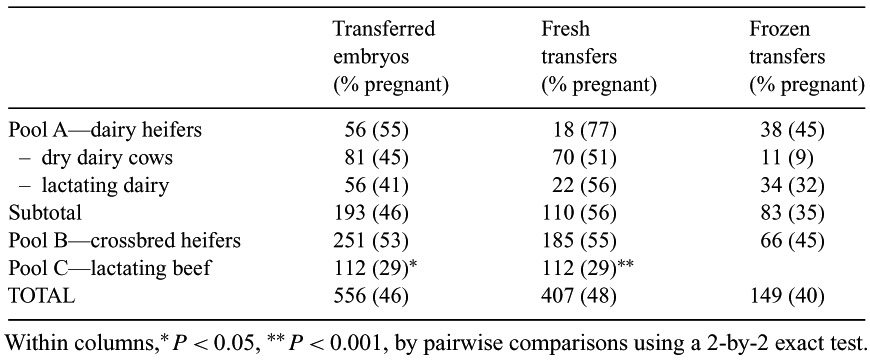
Commercial bovine IVP is being extended into new markets and regions worldwide. This study presents pregnancy results from 457 OPU (n = 2860 oocytes) sessions performed on a range of commercial donors (n = 43) collected twice weekly during a 6-month period in 2002 at a central donor facility. A SOF-culture system was utilized to produce blastocysts (n = 750, 1.6/session) for either fresh or frozen-thaw transfer into a wide range of recipient cattle on three sites. Cattle were synchronised with prostaglandin, were observed for behavioural estrus and were eligible to receive an embryo 7 days later. All OPU and embryo transfer were done by a single technician, and pregnancies were confirmed by ultrasound examination at 35 days of gestation. The following table summarizes early pregnancy results from 556 transferred embryos. Recipient selection remains a critical variable as shown in this pilot trial data set. New Zealand’s seasonal calving meant the lactating beef cattle were approximately 60 days postpartum at the start of the embryo transfer programs and the lactating dairy cows were 80 days postpartum. Postpartum interval and body condition score could be interesting variables to elucidate. Bulls were run with the beef cows shortly after embryo transfer resulting in 68% pregnancy rate of those cows whose embryos failed and then were naturally mated. Despite the disappointing results with the lactating beef cows, the overall results have led to OPU/IVP being commercially offered in this new market. The authors would like to acknowledge the ArTech IVP team and the enthusiastic cattle breeders of New Zealand.
|