

CSIRO Publishing blank image blank image blank image blank imageBooksblank image blank image blank image blank imageJournalsblank image blank image blank image blank imageAbout Usblank image blank image blank image blank imageShopping Cartblank image blank image blank image You are here: Journals > Australian Journal of Chemistry   
Australian Journal of Chemistry
Journal Banner
  An international journal for chemical science
 
blank image Search
 
blank image blank image
blank image
 
  Advanced Search
   

Journal Home
About the Journal
Editorial Board
Contacts
For Advertisers
Content
Online Early
Current Issue
Just Accepted
All Issues
Virtual Issues
Special Issues
Research Fronts
Sample Issue
Covers
For Authors
General Information
Notice to Authors
Submit Article
Open Access
For Referees
Referee Guidelines
Review Article
For Subscribers
Subscription Prices
Customer Service
Print Publication Dates

blue arrow e-Alerts
blank image
Subscribe to our Email Alert or RSS feeds for the latest journal papers.

red arrow Connect with us
blank image
facebook   youtube

Affiliated with RACI

Royal Australian Chemical Institute
Royal Australian
Chemical Institute


Table of Contents << Previous Issue     |        

Australian Journal of Chemistry Australian Journal of Chemistry
Volume 62 Number 12 2009


Table of Contents with graphics and descriptions 


pp. lxvii-lxxii


The Fabrication and Progress of Core-Shell Composite Materials 

Shunsheng Cao, Juanrong Chen and Jie Hu

pp. 1561-1576
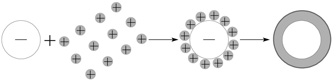

The fabrication of core-shell composite materials continues to be of significant interest for potential applicability in catalysis, semiconductors, magnetic composites, drug delivery, enzyme immobilization, molecular recognition, chemical sensing, etc. As a result, their production has led to numerous practical and conceptual developments in that direction. This review presents an overview of the synthetic strategies and highlights recent advances in the fabrication of the core-shell composite particles that will continue to optimize existing approaches and to drive new procedures in this field.


Synthesis and Single Chain Fluorescence of a Sulfonated Conjugated Polymer 

Daniel E. Gómez, Tina A. T. Tan, Jonathan M. White, Toby D. M. Bell and Kenneth P. Ghiggino

pp. 1577-1582
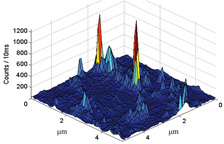

Water-soluble conjugated polymers have potential applications as luminescent sensors and photovoltaic materials. The synthesis and single molecule fluorescence properties of a novel water-soluble sulfonated conjugated polymer are reported in this work. The photophysical processes occurring are shown to be polymer chain and environment dependent.

    | Supplementary Material (72 KB)


X-Ray Crystal Structure, Acid–Base Properties and Complexation Characteristics of a Methylenephosphonate Derivative of 1,4,7,10-Tetraazacyclododecane 

Ute Kreher, Milton T. W. Hearn and Leone Spiccia

pp. 1583-1592
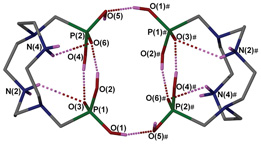

Stable copper(II) and nickel(II) complexes bound to chromatographic supports are highly effective agents for the separation and purification of proteins via immobilized metal affinity chromatography (IMAC). In order to use less toxic metal ions, we have been developing immobilized macrocyclic phosphonate ligands for use with hard metal ions. Investigations of the metal binding properties of such ligands indicate that the Fe3+ and Zn2+ complexes, and, to a lesser extent, the Ca2+ complex will be versatile candidates for use in the IMAC protein purification.


A Highly Selective Luminescent Sensor for Detecting Mercuric Ions in Water 

Sofian M. Kanan, Imad A. Abu-Yousef, Nora Hassouneh, Ahmed Malkawi, Naser Abdo and Marsha C. Kanan

pp. 1593-1599
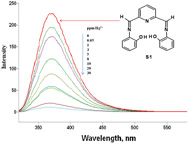

The ability to sense inorganic mercury (Hg2+) ions in solution is of great importance because this form is easily converted to the highly toxic methyl mercury that bioaccumulates in fish. Using the developed sensor S1, low concentrations of inorganic mercuric ions were selectively detected under typical pH values.


Microwave-Controlled Preparation of Alkenyl-(1H)-1,2,4-triazoles: First Heck Reaction on a (1H)-1,2,4-Triazole Moiety 

Ángel Díaz-Ortiz, Pilar Prieto, Abel de Cózar, Cristina Cebrián, Andrés Moreno and Antonio de la Hoz

pp. 1600-1606


A new microwave-controlled synthetic approach for the preparation of alkenyl-1,2,4-triazoles is described. To the best of our knowledge, this is the first application of the Heck reaction to a dihalogenated 1,2,4-triazole. This approach allows the introduction of a wide range of equivalent or different alkenyl substituents in the 5- and/or 3-positions

    | Supplementary Material (76 KB)


Synthesis, Structure, and Photoluminescent Properties of Two New Microporous Eu(III) Coordination Polymers with 2,4,6-Pyridinetricarboxylate 

Cui-Jin Li, Wei Li, Zhao-Sha Meng, Meng-Xia Peng, Ming-Mei Yang and Ming-Liang Tong

pp. 1607-1613
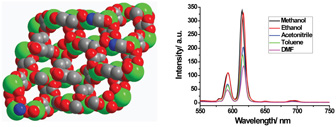

Two new three-dimensional microporous coordination polymers [Eu5(pyta)5(H2O)7]x3.5H2O (1) and [Eu2(ox)1.5(pyta)(H2O)4]x4.5H2O (2) have been hydrothermally synthesized and structurally characterized. Both 1 and 2 emit the characteristic photoluminescent properties of the Eu(III) ion. Dehydrated 2 shows interesting solvent-dependent photoluminescent properties.

    | Supplementary Material (545 KB)


A 'Butterfly'-shaped Water Tetramer in a Cu4 Complex Supported by a Hydrazone Ligand: Synthesis, Crystal Structure, Magnetic Properties, and Quantum Chemical Study 

Sambuddha Banerjee, Soma Sen, Joy Chakraborty, Ray J. Butcher, Carlos J. Gómez García, Ralph Puchta and Samiran Mitra

pp. 1614-1621
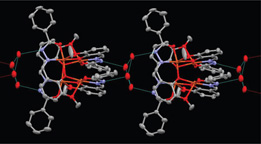

This paper describes the synthesis, X-ray crystal structure and VTM study of a tetranuclear CuII complex derived from a tetradentate hydrazone ligand LH2. The voids of these tetramers are occupied by tetranuclear water clusters with a very large dihedral angle. This paper also details a theoretical calculation describing the stability of such water cluster.

    | Supplementary Material (27 KB)


New Copper(II) and Nickel(II) Complexes with Bifunctional Tetrazolate-5-carboxylate Ligands: Syntheses, Crystal Structures, and Magnetic Properties 

A-Qing Wu, Qi-Yong Chen, Mei-Feng Wu, Fa-Kun Zheng, Feng Chen, Guo-Cong Guo and Jin-Shun Huang

pp. 1622-1630
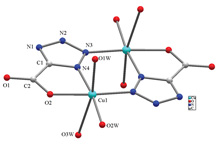

Four new CuII and NiII complexes with bifunctional tetrazolate-5-carboxylate ligands have been synthesized and structurally characterized. Variable-temperature magnetic susceptibility data show the presence of antiferromagnetic interactions in two dinuclear complexes.

    | Supplementary Material (1.8 MB)


Microwave-Induced Molecular Rearrangements. Flash Thermolysis in the Gas-Phase and in Solution: Synthesis of Quinolones and Naphthyridones 

Delphine Lecoq, Benjamin A. Chalmers, Rakesh N. Veedu, David Kvaskoff, Paul V. Bernhardt and Curt Wentrup

pp. 1631-1638
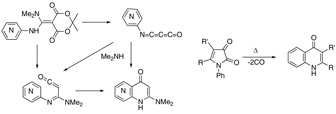

Quinolones and naphthyridones are obtained from Meldrum's acid and pyrroledione derivatives by flash vacuum thermolysis as well as by microwave-induced thermolysis in solution. A comparison of these two methods is provided.

    | Supplementary Material (517 KB)


Rapid, Chemoenzymatic Syntheses of the Epoxyquinols (–)-Bromoxone Acetate and (–)-Tricholomenyn A 

David M. Pinkerton, Martin G. Banwell and Anthony C. Willis

pp. 1639-1645
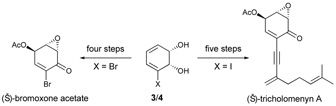

The illustrated and enantiomerically pure cis-1,2-dihydrocatechols 3 (X = Br) and 4 (X = I) have been converted into the epoxyquinols (–)-bromoxone acetate (1) and (–)-tricholomenyn A (2), respectively. Compounds 1 and 2 are typical examples of the simpler members of the ever growing class of epoxyquinol-based natural products.


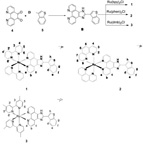
Synthesis, Characterization, DNA-Binding, and DNA-Photocleavage Properties of RuII Complexes 

Lifeng Tan, Xuejiao Chen and Jianliang Sheng

pp. 1646-1654


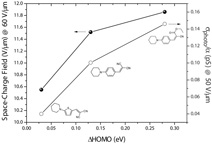
The Influence of Chromophores on the Magnitude of Space-Charge Fields in Photorefractive Polymeric Composites 

In Kyu Moon, Do Young Kim and Nakjoong Kim

pp. 1655-1660


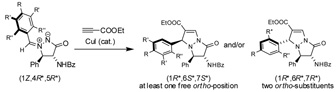
Copper(I) Iodide-Catalyzed Cycloadditions of (1Z,4R*,5R*)-4-Benzamido-5-phenylpyrazolidin-3-on-1-azomethine Imines to Ethyl Propiolate 

Lidija Pezdirc, Branko Stanovnik and Jurij Svete

pp. 1661-1666


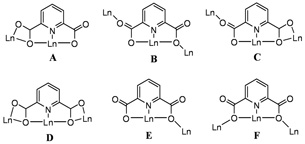
Two-Dimensional Layered Metal–Organic Frameworks of Lanthanum(III) Pyridine-2,6-dicarboxylate 

Yong-Ru Liu, Tao Yang, Lei Li, Jun-Min Liu and Cheng-Yong Su

pp. 1667-1674

    | Supplementary Material (1.5 MB)


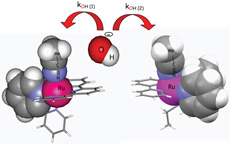
Synthesis and Structure of Novel RuII–N≡C–Me Complexes and their Activity Towards Nitrile Hydrolysis: An Examination of Ligand Effects 

Joaquim Mola, David Pujol, Montserrat Rodríguez, Isabel Romero, Xavier Sala, Néstor Katz, Teodor Parella, Jordi Benet-Buchholz, Xavier Fontrodona and Antoni Llobet

pp. 1675-1683

    | Supplementary Material (1.5 MB)


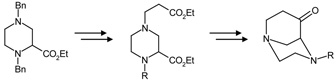
Synthesis of 1,4-Diazabicyclo[3.3.1]nonan-6-ones 

Daniel Kracht, Susumu Saito and Bernhard Wünsch

pp. 1684-1689


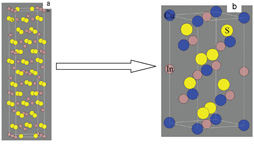
Synthesis of CuInS2 Microspheres using In2S3 Microspheres as Templates 

Ming Ge, Changsheng Guo, Lu Liu, Baoquan Zhang and Zhen Zhou

pp. 1690-1694


X-ray Structural Analysis for the Prediction on the Nature of the Retro Diels–Alder Pathway: Concerted or Stepwise. Structural Studies on Nitrosobenzene Cycloadducts 

Jesse Roth-Barton and Jonathan M. White

pp. 1695-1698
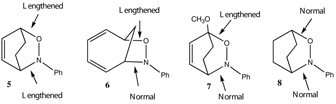

Crystal structures of nitrosobenzene cycloadducts 5–7 reveal structural effects consistent with the early stages of the retro Diels–Alder fragmentation. There is a clear differentiation between the structure parameters of cycloadduct 5, which reacts by a concerted synchronous pathway and that of cycloadduct 6, which must react by a two-step pathway. Based on these data, cycloadduct 7 is predicted to react by a highly asynchronous or two-step pathway.


Subscriber Login
Username:
Password:  

Current Issue
Journal Cover
Volume 66 (5)

red arrow Submit Article
blank image
Use the online submission system to send us your paper.

red arrow RAFT Compilation
blank image
The publication rate on RAFT polymerization continues to increase with the latest publication of a third update. Freely access the three reviews previously written by CSIRO scientists Moad, Rizzardo, and Thang on this subject in Australian Journal of Chemistry.

 Advertisement


Legal & Privacy | Contact Us | Help

CSIRO

© CSIRO 1996-2013