Australian Journal of Chemistry
Volume 63 Number 3 2010
RESEARCH FRONT: Molecular Modelling 2010
CH10108Molecular Modelling: All the Way from Atomistic Structure to Function in Complex Systems
Sean C. Smith and Qiao Sun
pp. 343-344
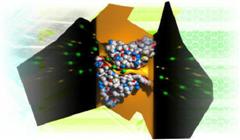
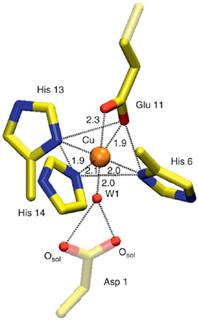
CH09454Modelling Copper Binding to the Amyloid-β Peptide in Alzheimer
V. Chandana Epa, Victor A. Streltsov and Joseph N. Varghese
pp. 345-349
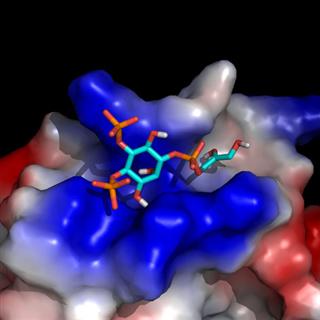
CH09355Interactions of Visinin-like Proteins with Phospho-inositides
Karl-Heinz Braunewell, Blessy Paul, Wassim Altarche-Xifro, Cornelia Noack, Kristian Lange and Andreas Hofmann
pp. 350-356
CH09458Applying Bi-directional Jarzynski Methods to Quasi-equilibrium States
James C. Reid, Stephen R. Williams and Debra J. Searles
pp. 357-362
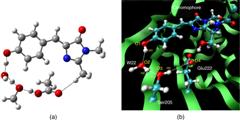
CH09509Structural and Relaxation Effects in Proton Wire Energetics: Model Studies of the Green Fluorescent Protein Photocycle
Qiao Sun, Sufan Wang, Hong Zhang, Zhen Li, Christoph Pifisterer, Stefan Fischer, Shinko Nanbu and Sean C. Smith
pp. 363-370
CH09442First-Principle Study of Atomic Hydrogen Interaction with a Fluorinated Corannulene Radical
Hong Zhang, Sean C. Smith, Shinkoh Nanbu and Hiroki Nakamura
pp. 371-378
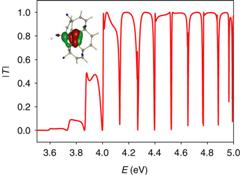
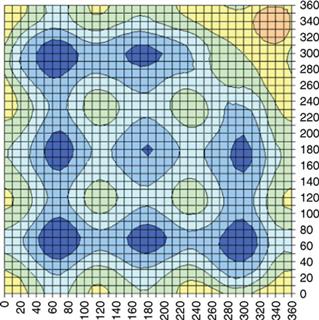
CH09456Estimating Relative Disulfide Energies: An Accurate Ab Initio Potential Energy Surface
Naomi L. Haworth, Jason Y. Liu, Samuel W. Fan, Jill E. Gready and Merridee A. Wouters
pp. 379-387
CH09456 Abstract | CH09456 Full Text | CH09456PDF (1.5 MB) | CH09456Supplementary Material (891 KB) Open Access Article
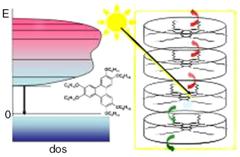
CH09459Molecular Modelling of Ground- and Excited-States Vibrations in Organic Conducting Devices: Hexakis(n-hexyloxy)triphenylene (HAT6) as Case Study
M. Zbiri, M. R. Johnson, L. Haverkate, F. M. Mulder and G. J. Kearley
pp. 388-395
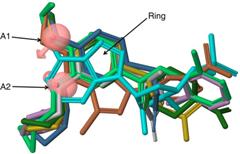
CH09463Binding Mode Prediction of PDE4 Inhibitors: A Comparison of Modelling Methods
Diana S. Neale, Philip E. Thompson, Paul J. White, David K. Chalmers, Elizabeth Yuriev and David T. Manallack
pp. 396-404
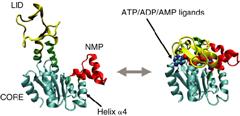
CH09449Allosteric Conformational Transition in Adenylate Kinase: Dynamic Correlations and Implication for Allostery
Ming S. Liu, Billy D. Todd and Richard J. Sadus
pp. 405-412
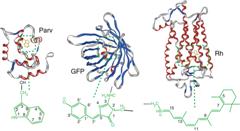
CH09563Computational Photobiology and Beyond
Igor Schapiro, Mikhail N. Ryazantsev, Wan Jian Ding, Mark M. Huntress, Federico Melaccio, Tadeusz Andruniow and Massimo Olivucci
pp. 413-429
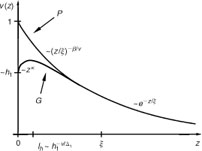
CH09290Adsorption and Dipole Surface Orientational Order at Liquid Surfaces
Bruce M. Law, Jae-Hie Cho, John Carpenter and Dan Smith
pp. 430-433
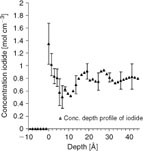
CH09294Concentration Depth Profiles of Inorganic Ions at Liquid Surfaces
Gunther Andersson
pp. 434-437
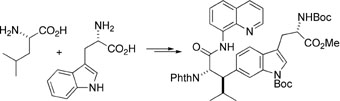
CH10033Synthesis of the Leu–Trp Component of the Celogentin Family of Cyclic Peptides Through a C–H Activation–Cross-Coupling Strategy
Barbara T. Y. Li, Jonathan M. White and Craig A. Hutton
pp. 438-444
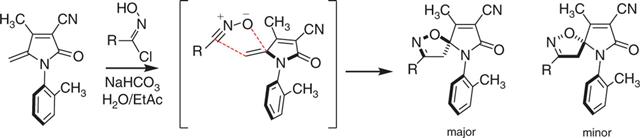
CH09479Spiroheterocycles via Regioselective Cycloaddition Reactions of Nitrile Oxides with 5-Methylene-1H-pyrrol-2(5H)-ones
Nicola J. Beattie, Craig L. Francis, Andris J. Liepa and G. Paul Savage
pp. 445-451
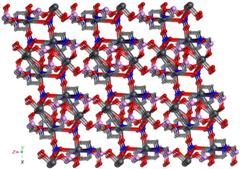
CH09382Structure and Characterization of a Novel 3D Lead Phosphonate Metal–Organic Framework with Cationic Layer Based on Weak Pb–O(N) Contact
Kui-Rong Ma, Dao-Jun Zhang and Yu-Lan Zhu
pp. 452-457
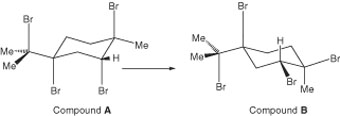
CH09606On the Solid-State Isomerization of Terpinolene Tetrabromide
Paul V. Bernhardt, Raymond M. Carman and Tri T. Le
pp. 458-462
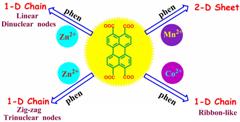
CH09411Coordination Polymers with a Bulky Perylene-Based Tetracarboxylate Ligand: Syntheses, Crystal Structures, and Luminescent Properties
Chun-Sen Liu, Min Hu, Song-Tao Ma, Qiang Zhang, Li-Ming Zhou, Li-Jun Gao and Shao-Ming Fang
pp. 463-473
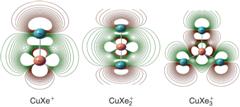
CH09381Theoretical Investigation on Structures and Stabilities of CuXenZ (n = 1–3, Z = –1, 0, +1) Clusters
Li Xinying, Wu Senfeng, Zhou Chengfang and Zhao Yongfang
pp. 474-478
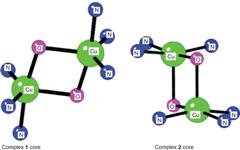
CH09396Structural Variation and Magneto-Structural Correlation in Two New Dinuclear Bis(µ2-Phenoxo)-Bridged CuII Schiff-Base Complexes: Catalytic Potential for the Peroxidative Oxidation of Cycloalkanes
Subhra Basak, Soma Sen, Partha Roy, Carlos J. Gómez-García, David L. Hughes, Ray J. Butcher, Eugenio Garribba and Samiran Mitra
pp. 479-489
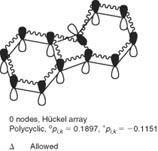
CH09339An Alternative Platform for the Assessment of Hückel and Möbius Transition States in Concerted Reactions
Kurt H. R. Hennigar and Richard F. Langler
pp. 490-501
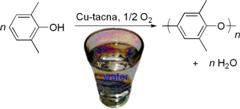
CH095621,4,7-Tricarboxymethyl-1,4,7-triazacyclononane Copper Catalyzed Oxidative Polymerization to Form Poly(2,6-dimethyl-1,4-phenylene oxide) in Water
Sweta Pant, Milton T. W. Hearn and Kei Saito
pp. 502-506
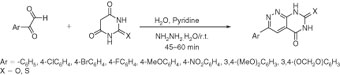
CH09569A Simple One-Pot, Three Component Synthesis of 3-Arylpyrimido[4,5-c]pyridazine-5,7(6H,8H)-diones and their Sulfur Analogues as Potential Monoamine Oxidase Inhibitors
Mehdi Rimaz, Jabbar Khalafy, Nader Noroozi Pesyan and Rolf H. Prager
pp. 507-510
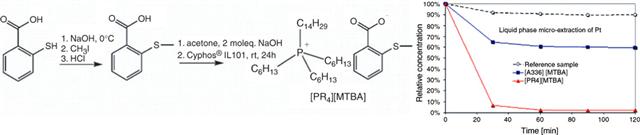
CH09340Phosphonium and Ammonium Ionic Liquids with Aromatic Anions: Synthesis, Properties, and Platinum Extraction
Anja Stojanovic, Daniel Kogelnig, Lisa Fischer, Stephan Hann, Markus Galanski, Michael Groessl, Regina Krachler and Bernhard K. Keppler
pp. 511-524
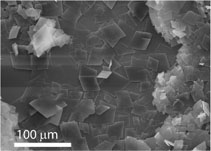
CH09292On the Superhydrophobic Properties of Crystallized Stearic Acid
Kyle R. Joseph and Chiara Neto
pp. 525-528
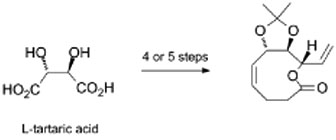
CH09637Asymmetric Synthesis of a Hydroxylated Nine-membered Lactone from Tartaric Acid using the Claisen Rearrangement
Leon S.-M. Wong, Kathleen A. Turner, Jonathan M. White, Andrew B. Holmes and John H. Ryan
pp. 529-532