Australian Journal of Chemistry
Volume 64 Number 5 2011
RESEARCH FRONTS: 1. The First International Collaborative and Cooperative Chemistry Symposium; 2. Molecular Imaging
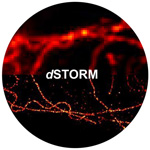
CH10284Single-molecule Photoswitching and Localization
Sebastian van de Linde, Steve Wolter and Markus Sauer
pp. 503-511
CH10284 Abstract | CH10284 Full Text | CH10284PDF (758 KB) Open Access Article
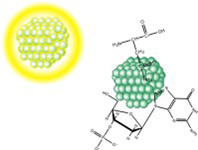
CH10293Fluorescence Quenching of Quantum Dots by DNA Nucleotides and Amino Acids
Daniel Siegberg and Dirk-Peter Herten
pp. 512-516
CH10293 Abstract | CH10293 Full Text | CH10293PDF (398 KB) Open Access Article
CH11187The First International Collaborative and Cooperative Chemistry Symposium
James J. De Voss
pp. 517-518

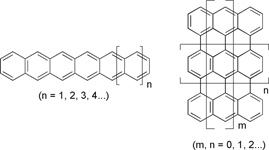
CH11037Higher Order Acenes and Fused Acenes with Near-infrared Absorption and Emission
Zhe Sun and Jishan Wu
pp. 519-528
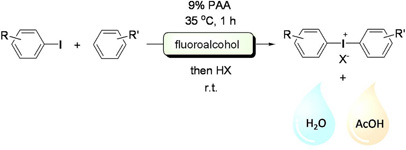
CH11057One-Pot Syntheses of Diaryliodonium Salts from Aryl Iodides Using Peracetic Acid as Green Oxidant
Toshifumi Dohi, Nobutaka Yamaoka, Itsuki Itani and Yasuyuki Kita
pp. 529-535
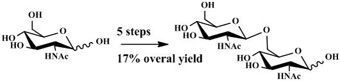
CH11055A Direct, Heavy Metal Free Synthesis of the ?-1,6-Linked GlcNAc Disaccharide
Lucy G. Weaver, Melissa Foster, Yogendra Singh, Paul L. Burn and Joanne T. Blanchfield
pp. 536-539
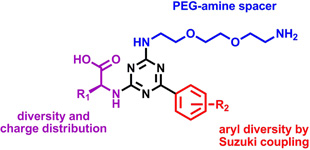
CH11034Combinatorial Solid-Phase Synthesis of 6-Aryl-1,3,5-triazines via Suzuki Coupling
Jae Wook Lee, Hyung-Ho Ha, Marc Vendrell, Jacqueline T. Bork and Young-Tae Chang
pp. 540-544
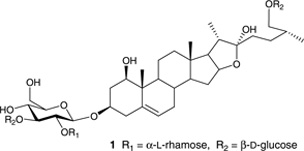
CH11056Steroidal Saponins Isolated from an Australian Yam Dioscorea sp.
Victoria L. Challinor, David M. Smith and James J. De Voss
pp. 545-549
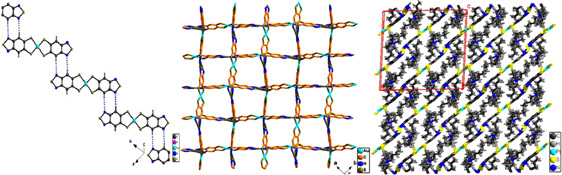
CH11049Cyclometalated Ir(III) Complexes Containing Pyrazole/Pyrazine Carboxylate Ligands
Tanima Hajra, Jitendra K. Bera and Vadapalli Chandrasekhar
pp. 561-566
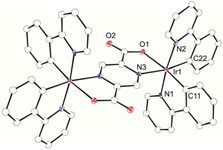
CH11080Homo and Heterocoupling of Terminal Alkynes Using Catalytic CuCl2 and DBU
Rengarajan Balamurugan, Naganaboina Naveen, Seetharaman Manojveer and Masthan Vali Nama
pp. 567-575

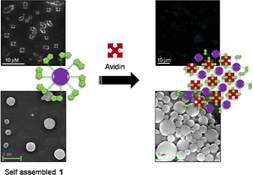
CH11020Investigating the Avidin-Biotin Interaction on Chiral Soft Structure Platforms
K. Vijaya Krishna and Sandeep Verma
pp. 576-582
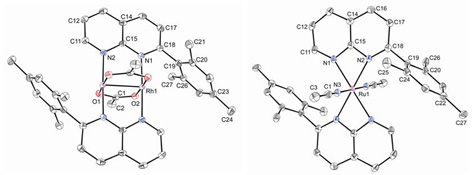
CH11060Contrasting Reactivity of 2-Mesityl-1,8-Naphthyridine (Mes-NP) with Singly-Bonded [RhII–RhII] and [RuI–RuI] Compounds
Biswajit Saha, S. M. Wahidur Rahaman, Arup Sinha and Jitendra K. Bera
pp. 583-589
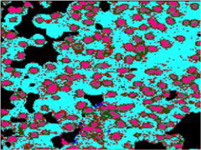
CH11126Standing Out in the Crowd: Signal-to-Background in Molecular Imaging
James R. Johnson and David Piwnica-Worms
pp. 590-592

CH11136Molecular Imaging of Red Blood Cells by Raman Spectroscopy
Bayden R. Wood, Paul R. Stoddart and Donald McNaughton
pp. 593-599
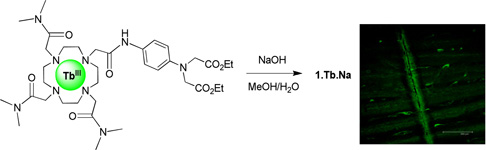
CH11021Luminescent Terbium Contrast Agent for Bone Microdamage Detection
Brian K. McMahon, Peter Mauer, Colin P. McCoy, T. Clive Lee and Thorfinnur Gunnlaugsson
pp. 600-603
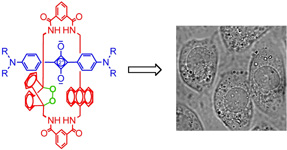
CH11038Singlet Oxygen Release and Cell Toxicity of a Chemiluminescent Squaraine Rotaxane Dye: Implications for Molecular Imaging
Jung-Jae Lee, Amanda Gonçalves, Bryan A. Smith, Rachel Palumbo, Alexander G. White and Bradley D. Smith
pp. 604-610
CH11019Raman Spectroscopic Imaging of Cholesterol and Docosahexaenoic Acid Distribution in the Retinal Rod Outer Segment
Zachary D. Schultz
pp. 611-616
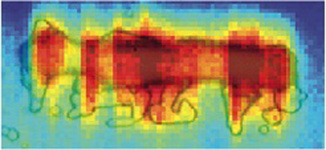
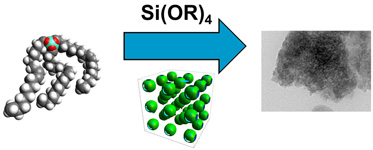
CH11064Disordered Mesoporous Gadolinosilicate Nanoparticles Prepared Using Gadolinium Based Ionic Liquid Emulsions: Potential as Magnetic Resonance Imaging Contrast Agents
Guozhen Liu, Nicholas M. K. Tse, Matthew R. Hill, Danielle F. Kennedy and Calum J. Drummond
pp. 617-624
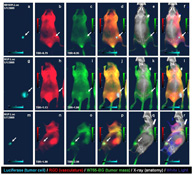
CH10449Multi-wavelength Optical Imaging of Human Tumour Xenografts
Wei Wang, Arlin G. Cameron, Juliet A. Wendt, Michel E. Mawad and Shi Ke
pp. 625-632
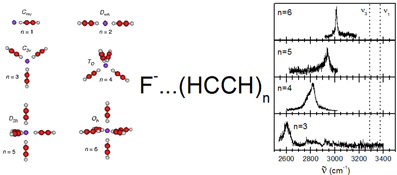
CH11032Infrared Spectra and ab initio Calculations for Fluoride-acetylene Clusters: F–-(HCCH)n, n = 3–6
Duncan A. Wild, Zoë M. Loh and Evan J. Bieske
pp. 633-637
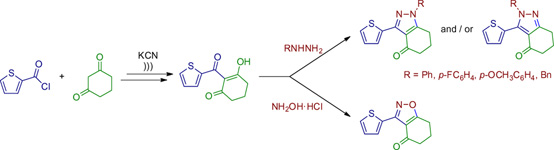
CH11015Novel Synthesis of 2-thienylcarbonyl-cyclohexane-1,3-dione as Building Block for Indazolones and Isoxazolones
Guillermo M. Chans, Elizabeth L. Moyano and Gloria I. Yranzo
pp. 638-646
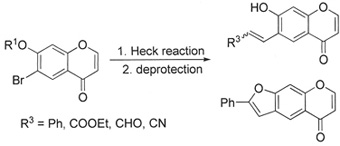
CH10296The Heck Reaction of Protected Hydroxychromones: on route to Natural Products
Attila Vasas, Tamás Patonay, Krisztina Kónya, Artur M. S. Silva and José A. S. Cavaleiro
pp. 647-657
CH11002Modification of Aryldiazonium Salts on Electrodes towards Designing Stable and Versatile Sensing Interfaces
Guozhen Liu
pp. 658-658
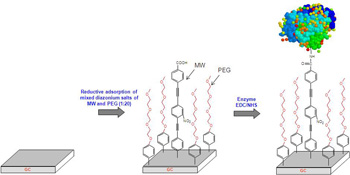
This paper reports the strategy of electrochemically reductive adsorption of aryldiazonium salts on electrodes for designing stable sensing interface. The diazonium salt chemistry can serve as an alternative system to alkanethiol-gold chemistry for the modification of electrode surfaces for biosensor applications.