
Australian Journal of Chemistry
Volume 64 Number 11 2011
RESEARCH FRONT: Organoboron Chemistry

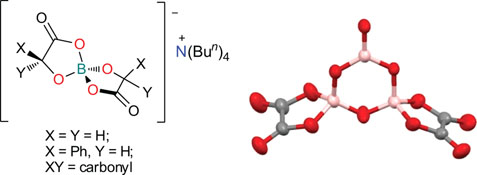
CH11284 Quaternary Ammonium Spiroborate Esters and Mixed Anhydrides Derived from Aliphatic ?-Hydroxy Acids and Diacids and their Wood Protection Properties
Jenny M. Carr, Peter J. Duggan, David G. Humphrey, Edward M. Tyndall and Jonathan M. White
pp. 1417-1424
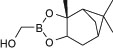
CH11289 Preparation and Properties of (Hydroxymethyl)boronic Acid and its Pinanediol Ester
Donald S. Matteson
pp. 1425-1429
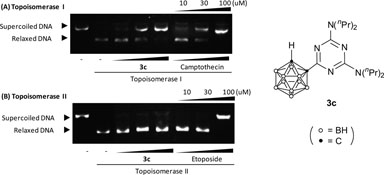
CH11295 Discovery of ortho-Carborane-Conjugated Triazines as Selective Topoisomerase I/II Inhibitors
Hiroyuki Nakamura, Atsushi Shoji, Ayano Takeuchi, Hyun Seung Ban, Jong-Dae Lee, Takao Yamori and Sang Ook Kang
pp. 1430-1437
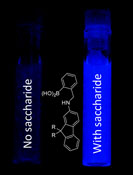
CH11297 Using Quenching Kinetics and Thermodynamics of Amino-Fluorophores as Empirical Tools for Predicting Boronic Acid Sensors Suitable for Use in Physiological Conditions
Nicholas McGregor, Christophe Pardin and W. G. Skene
pp. 1438-1446
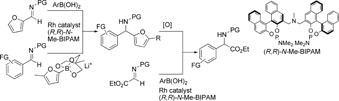
CH11225 Enantioselective Synthesis of Arylglycine Derivatives by Asymmetric Addition of Arylboronic Acids to Imines
Yasunori Yamamoto, Yoshinori Takahashi, Kazunori Kurihara and Norio Miyaura
pp. 1447-1453
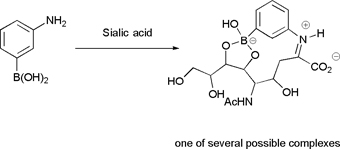
CH11296 Comparing Self-Assembling and Covalent Fluorescent Boronolectins for the Detection of Free Sialic Acid
Stephan M. Levonis, Milton J. Kiefel and Todd A. Houston
pp. 1454-1457
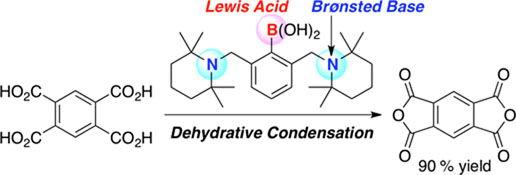
CH11301 Intramolecular Dehydrative Condensation of Dicarboxylic Acids with Brønsted Base-Assisted Boronic Acid Catalysts
Akira Sakakura, Risa Yamashita, Takuro Ohkubo, Matsujiro Akakura and Kazuaki Ishihara
pp. 1458-1465
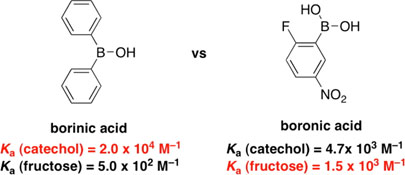
CH11294 Borinic Acids: A Neglected Class of Organoboron Compounds for Recognition of Diols in Aqueous Solution
Michael G. Chudzinski, Yuechuan Chi and Mark S. Taylor
pp. 1466-1469
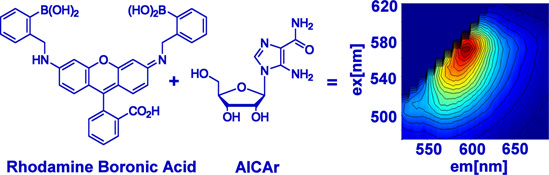
CH11328 Progress Towards Simple and Direct Detection of Adenylosuccinate Lyase Deficiency in Human Urine
Soojin Lim, Mark Lowry and Robert M. Strongin
pp. 1470-1473
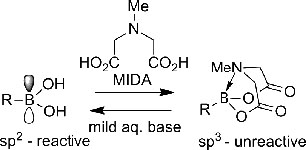
CH11303 N-Methyliminodiacetate (MIDA): A Useful Protecting Group for the Generation of Complex Organoboron Compounds
Quentin I. Churches
pp. 1474-1474
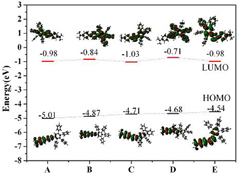
CH11114 Theoretical Study of Optical and Electronic Properties of Unsymmetrical Dendritic Molecules with Different Bridge Moieties
Yanling Wang, Qiang Peng, Ying Liang, Benlin Li and Weiguo Zhu
pp. 1475-1484
CH11086 Modulations of Starch Structure with Potential to Influence Health
Donald B. Thompson
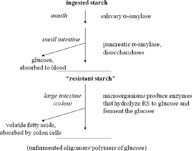
pp. 1485-1487
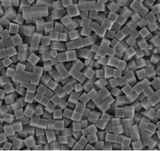
CH11241 The Role of Oxygen in Synthesizing Monodisperse Silver Nanocubes
Bakul Gupta, Will Rouesnel and J. Justin Gooding
pp. 1488-1493
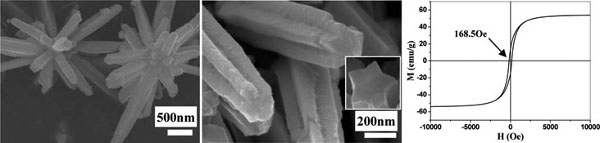
CH11127 Flowery Ni Microcrystals Consisting of Star-shaped Nanorods: Facile Synthesis, Formation Mechanism and Magnetic Properties
Hao Li, Jinyun Liao, Zhen Jin, Xibin Zhang, Xiuxian Lu, Jinjie Liang, Yufa Feng and Shiwen Yu
pp. 1494-1500
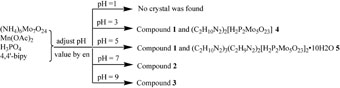
CH11134 pH-Dependent Assembly of Reduced Polyoxomolybdenum Phosphates Modified by MnII
Jing Lu, Hou-Ting Liu, Hao Song, Su-Na Wang, Da-Qi Wang and Xian-Xi Zhang
pp. 1501-1508
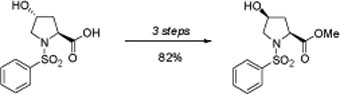
CH11204 Studies on the Synthesis of cis-4-Hydroxy-L-proline
Jessica A. Smith, G. Paul Savage and Oliver E. Hutt
pp. 1509-1514
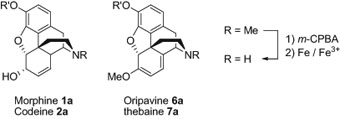
CH11320 Efficient Iron-Catalyzed N-Demethylation of Tertiary Amine-N-oxides under Oxidative Conditions
Gaik B. Kok and Peter J. Scammells
pp. 1515-1521
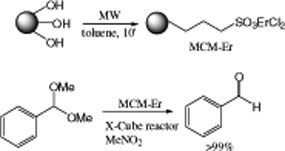
CH11125 Microwave-Assisted Grafting to MCM-41 Silica and its Application as Catalyst in Flow Chemistry
Manuela Oliverio, Antonio Procopio, Toma N. Glasnov, Walter Goessler and C. Oliver Kappe
pp. 1522-1529
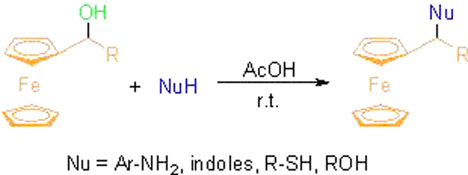
CH11167 Direct C–O Bond Activation Mediated by AcOH: A New Metal-Free Way for α-Functionalization of Ferrocene Alcohols
Ran Jiang, Xue-Qiang Chu, Xiao-Ping Xu, Bin Wu and Shun-Jun Ji
pp. 1530-1537
CH11068_COCorrigendum to: Athelstan L. J. Beckwith and the Flowering of Hex-5-enyl Radical Cyclization Chemistry. The Adelaide Years
Algirdas K. Serelis
pp. 1538-1538
CH10404_COCorrigendum to: A Profluorescent Azaphenalene Nitroxide for Nitroxide-Mediated Polymerization
John M. Colwell, James P. Blinco, Courtney Hulbert, Kathryn E. Fairfull-Smith and Steven E. Bottle
pp. 1539-1539
CH11056_COCorrigendum to: Steroidal Saponins Isolated from an Australian Yam Dioscorea sp.
Victoria L. Challinor, David M. Smith and James J. De Voss
pp. 1540-1540