
29 HEALTH AND REPRODUCTIVE PROFILES OF NUCLEAR TRANSFER GOATS PRODUCING THE MSP1-42 MALARIA ANTIGEN
E. Behboodi A , S.L. Ayres B , E. Memili A , M. O’Coin A , L.H. Chen A , H.M. Meade A and Y. Echelard AA GTC Biotherapeutics, Inc., Framingham, MA, USA. email: yann.echelard@gtc-bio.com;
B Department of Biomedical Science, Tufts University School of Veterinary Medicine, Grafton, MA, USA.
Reproduction, Fertility and Development 16(2) 137-137 https://doi.org/10.1071/RDv16n1Ab29
Submitted: 1 August 2003 Accepted: 1 October 2003 Published: 2 January 2004
Abstract
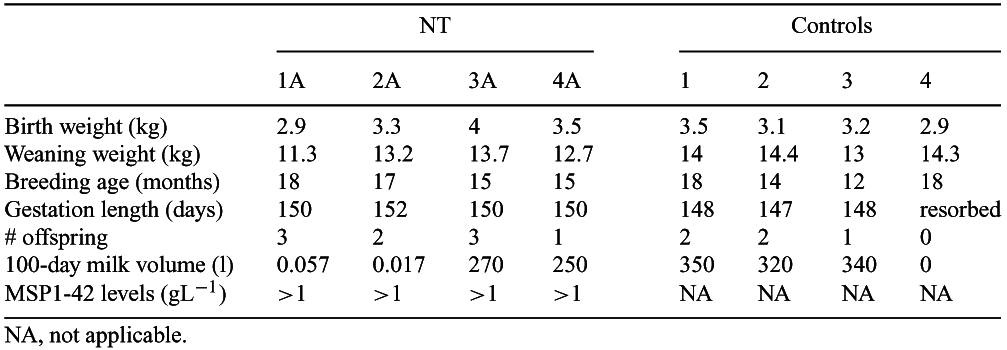
Somatic cell nuclear transfer (NT) using transfected primary cells is an efficient approach for the generation of transgenic large animals. However, abnormalities associated with the NT process could compromise the usefulness of cloned animals. In order to evaluate whether cloned animals could be used for the production of recombinant therapeutic proteins in milk, we examined the health, reproductive performance and milk production of 4 transgenic does derived from somatic cell NT. Two versions of the MSP1-42 transgene encoding either a glycosylated or a non-glycosylated MSP1-42 protein were constructed. Following somatic cell NT, 4 healthy transgenic does were born (Chen LH et al., 2002 Theriogenology 57, 777 abst). Does 1A and 2A were obtained from the same cell line carrying the glycosylated MSP1-42 transgene, whereas 3A and 4A were from a cell line carrying the non-glycosylated transgene. Health and growth of these NT animals was monitored with the supervision of a veterinarian and compared to age-matched control dairy does. All animals were bred naturally and, except for one control doe, delivered healthy kids. The 4 NT does produced a total of 9 kids of which 8 were live and one was stillborn. The control does delivered 5 kids, one fetus being lost during early pregnancy. Three of the eight kids from the NT animals were transgenic; all kids were normal and healthy. All does were milked after parturition, and recombinant protein expression in the milk of NT does was evaluated. There were no differences in birth and weaning weights or fertility between NT and control animals. The NT does expressing the glycosylated antigen (1A, 2A) produced only small amounts of milk at induction and postpartum. The reduced milk yield for that line is possibly caused by the expression of the transgene. However, normal lactations were achieved with the 2 does expressing the non-glycosylated antigen (3A, 4A), each producing in 100 days enough MSP1-42 protein to generate 5 million doses of the Malaria vaccine. These data demonstrate that transgenic goats produced by somatic cell NT can be used successfully for the recombinant production of therapeutic proteins.
|