
99 EFFECT OF CYSTEAMINE ON SURVIVAL OF BOVINE AND OVINE OOCYTES VITRIFIED USING THE MINIMUM VOLUME COOLING (MVC) CRYOTOP METHOD
J. Kelly A , D. Kleemann A , M. Kuwayama B and S. Walker AA South Australian Research and Development Institute, Rosedale, Australia
B Kato Ladies' Clinic, Toyko, Japan
Reproduction, Fertility and Development 18(2) 158-158 https://doi.org/10.1071/RDv18n2Ab99
Published: 14 December 2005
Abstract
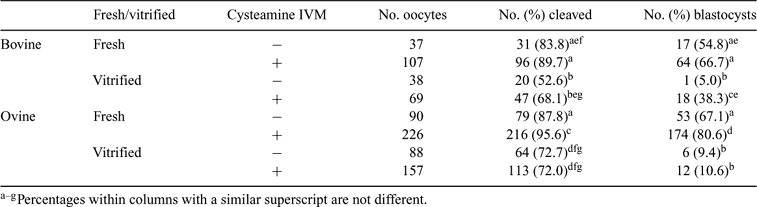
The addition of cysteamine to maturation (IVM) media increases glutathione (GSH) synthesis in bovine oocytes and improves embryo development and quality (de Matos et al. 1995 Mol. Reprod. Dev. 42, 432–436). This study assesses the effect of adding cysteamine to IVM media on the survival of bovine and ovine oocytes following vitrification using the MVC cryotop method (Kuwayama and Kato 2000 J. Assist. Reprod. Genet. 17, 477 abst.). Abattoir-sourced bovine and ovine cumulus–oocyte complexes (COC) were matured in IVM media with or without 100 μM cysteamine for 24 h. After maturation, the COC were partially denuded and a proportion vitrified. Oocytes were equilibrated with 10% ethylene glycol (EG) and 10% dimethyl sulfoxide (DMSO) for 30 s and then exposed to 20% EG, 20% DMSO, 0.5 M sucrose, and 20% FCS for 15 s. Oocytes were loaded onto a MVC plate (Cryotop, Kitazato Supply, Tokyo), and plunged into liquid nitrogen. After 5 days, oocytes were thawed directly into 1.25 M sucrose solution at 38.5°C, followed by stepwise dilution of the cryoprotectants. Ova were subsequently fertilized (Day 0) and cultured in modified SOF. Oocyte survival was assessed by cleavage and development to Day 8 compared with the development of fresh oocytes. Main effects, interactions and individual treatment differences were tested using procedure CATMOD in SAS. Cleavage rate was higher (P < 0.001) for fresh oocytes than for vitrified oocytes and it increased (P < 0.05) only for fresh ovine oocytes when cysteamine was added to maturation media. Blastocyst development was influenced by a significant (P < 0.001) interaction between species and whether or not oocytes were vitrified. This interaction occurred because cysteamine improved blastocyst rate in fresh ovine and vitrified bovine oocytes but not in other treatments. These results show that bovine oocytes (38.3% blastocyst rate) can be vitrified successfully when maturation occurs in the presence of cysteamine; however, a comparable result did not occur in ovine oocytes (10.6% blastocyst rate) despite >70% cleavage.
|