|
 |
home | glossary | about eucalypts | about EUCLID | browse species Eucalyptus acaciiformis |
|
Wattle-leaved peppermint |
|
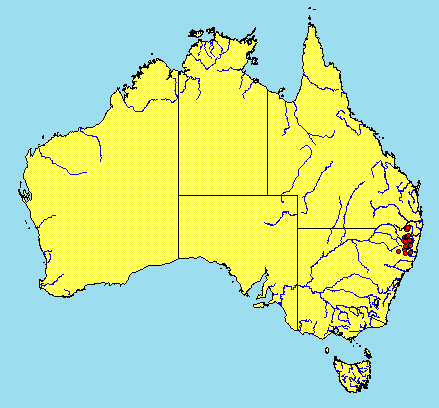
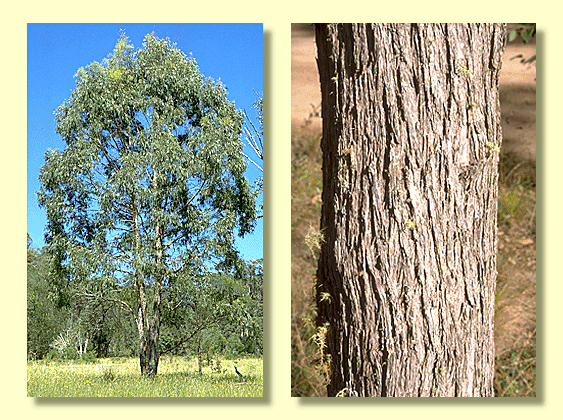
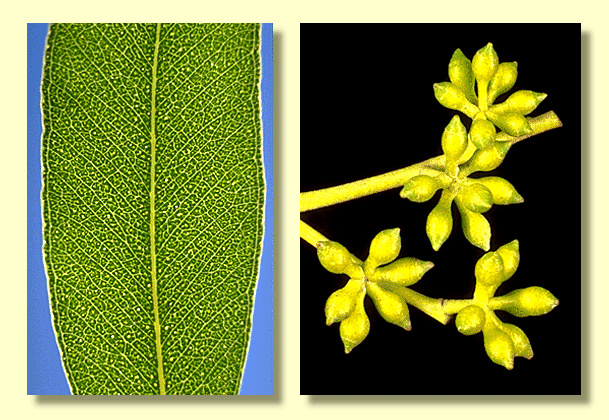
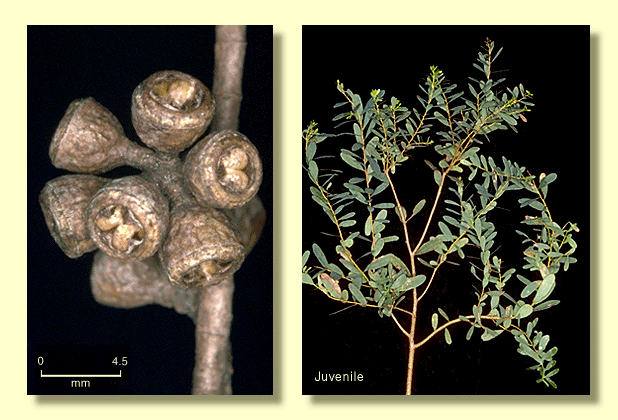
Eucalyptus acaciiformis Deane & Maiden, Proc. Linn. Soc. New South Wales 24: 454 (1899) T: Yarrowitch, N.S.W., 1897, J.H.Maiden; lecto: NSW, fide J.H.Maiden, Crit. Revis. Eucalyptus 3: 43 (1914); isolecto: MEL. Tree to 20 m tall. Bark rough to small branches, stringy or fibrous, grey to grey-brown. Juvenile stem rounded in cross-section, warty or smooth; juvenile leaves opposite at first but soon alternate, sessile, elliptical, 2-4.5 cm long, 0.5-1.5 cm wide, margin entire or crenulate, blue-green or grey-green. Adult leaves alternate, petiolate, lanceolate to falcate, 5-13 cm long, 1-2.2 cm wide, base tapering to petiole, margin entire, concolorous, usually dull, green or grey-green, penniveined, moderately to densely reticulate, intramarginal vein parallel to and just within margin, oil glands island and intersectional. Inflorescences axillary unbranched, peduncles 0.2-0.6 cm long, 7-flowered; buds pedicellate, ovoid to fusiform, green, scar present, operculum conical to beaked, stamens inflexed or irregularly flexed, anthers cuboid to oblong, versatile, dorsifixed, dehiscing by longitudinal slits (non-confluent), style long, locules 3 or 4, the placentae each with 4 vertical ovule rows; flowers white. Fruit pedicellate, cup-shaped, hemispherical or campanulate, 0.4-0.5 cm wide, disc raised, valves 3 or 4, near rim level. Seed brown, 1.2-2 mm long, ovoid or depressed-ovoid, often lacunose, dorsal surface pitted, hilum ventral. NOTES Eucalyptus acaciiformis (Latin for Acacia-like, of the leaves) One of the small-fruited, rough-barked species, it differs from the better known E. nicholii by the broader adult leaves, oblong less clustered juvenile leaves, and less conspicuous valves to the fruit. E. acaciiformis belongs to the largely south-eastern section Maidenaria in a series (Acaciiformes) diagnosed by the rough bark, glandular leaves, non-swampy habitat, and small, rather flat-topped fruit with a triangular 3-valved orifice. It occurs on the eastern margins of the Northern Tablelands of New South Wales, often on granitic soils. |
    |