|
 |
home | glossary | about eucalypts | about EUCLID | browse species About eucalypts |
|
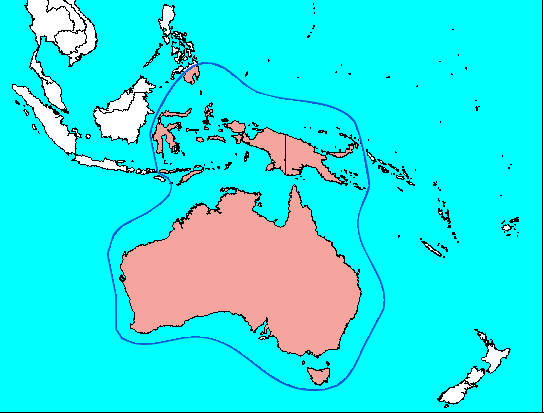
Eucalypts are almost a defining feature of Australia. They are the dominant tree of the developed areas of the country although largely absent from the driest regions. There are over 700 species which have adapted to nearly every environment. In EUCLID we include (because of its close affinities to Eucalyptus) the long-standing genus Angophora, which is exclusive to eastern Australia excluding Tasmania.
One species is scattered as far as the southern island of the Philippines which places one eucalypt naturally in the northern hemisphere. However, the genus is now cultivated world-wide in tropical and temperate countries and in some places has become naturalised. Eucalypts are now of great importance commercially in other countries, particularly South Africa, China, India and Brazil and to a lesser extent in central and northern Africa and in Mediterranean countries. They have many advantages apart from the timber and fibre which are the basis of huge paper industries and are notable for their oils, use in lowering water tables, shade and simple ornamentation.
Innumerable books have been published on eucalypts. Some of these are packed with all aspects of information, others concentrate on the more spectacular flowering species while others specialise in identification. Identification has always been regarded as difficult but this has been largely due to the lack of instruction on the botanical characteristics. Understanding the eucalypt plant is a vital element in attempting the identification process. It is a fact that to the uninitiated, most Eucalyptus species tend to look the same. People may think of well known wattle species and other plant groups and make interesting comparisons with eucalypts. Consider the Cootamundra Wattle (Acacia baileyana) and Golden Wattle (Acacia pycnantha) which are so clearly different with their greatly contrasting types of foliage. Only a few eucalypts, on the other hand, have very odd leaves and these are mainly the more bizarre but beautiful ornamentals from Western Australia.
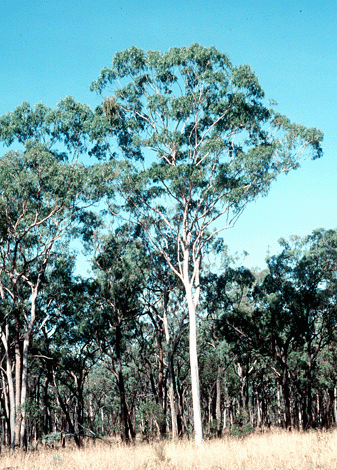
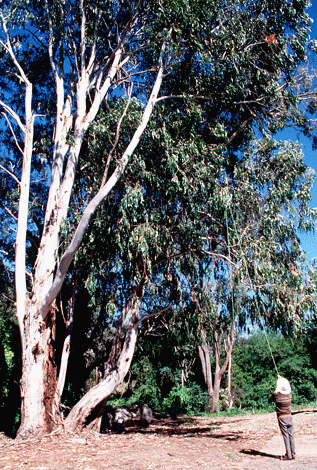
The first assessment of a eucalypt will obviously be made on approach to a tree or forest. An important decision that has to be made is to recognise whether the trees are cultivated, street trees are an obvious example, or in a natural stand. If cultivated, they could be from anywhere in Australia and the identification cannot take into account the regional break-up in EUCLID. As a general rule for cultivated species, it may be said that tropical northern species seldom grow well in the temperate south, and vice versa, although there is the notable exception of the widely cultivated E. citriodora which grows well in the southern States where it is a favourite ornamental. The observer needs firstly to take into account aspects of the specimen as seen on approach, viz. the height of the plant, the number of stems or trunks, the colour of the crown, the general size of the leaves (very small, e.g. E. parvula or very large, e.g. E. globulus) and the type of bark. It is worth mentioning here, that if a photographic record is wanted, trees should always be photographed in early morning or late afternoon, although in winter, photography is usually successful at most times of the day if the sun is out. This timing is to ensure that side light is used such that the trunk or stems are in sunlight. Crown colours can be distorted or misinterpreted by top light near the middle of the day.
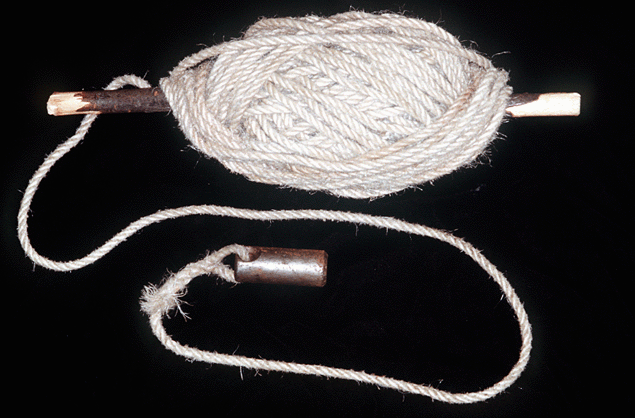
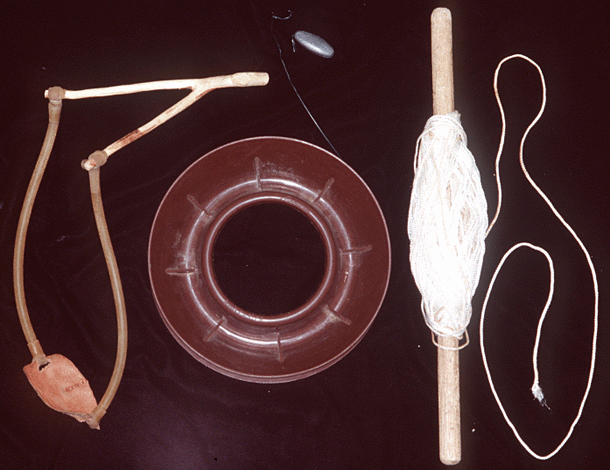
The internal features of the eucalypt plant are more reliable than the external features. They are relatively protected from the elements and from various forms of predation. They are the parts that require handling and close inspection or even dissection, as opposed to mere observation. Specimens for study may be obtained in several ways from a living tree. Sampling mallees is usually easy because the leaves and flowering structures are often at about head height and no sophisticated methods of collection are needed. For most trees, however, a weighted length of rope can be thrown over a low branch which can then be broken off with a sharp tug and pulled to the ground for close inspection of the parts. For tall trees it is a curious fact that the flower and fruits are small and scarcely visible to the unaided eye. Then the canopy needs to be inspected with binoculars and a useful branch selected. If it is above rope-throwing height, the branch may be reached by a shanghai or, for large branches which are often dropped for commercial seed collecting, high-powered rifles are used. It must be emphasised that the most reliable features are those that require demonstration on how to access and interpret them. They are not assessable by superficial observation. The whole process of identification begins in the field with broad external assessment and ends with microscopic examination. The characters in this sequence of investigations have reliabilities that vary from very low to high and finally absolute. Only experience allows the user to weigh up these relative values and apply them with confidence. |