|
 |
home | glossary | about eucalypts | about EUCLID | browse species More about eucalypts |
|
Fruit |
|
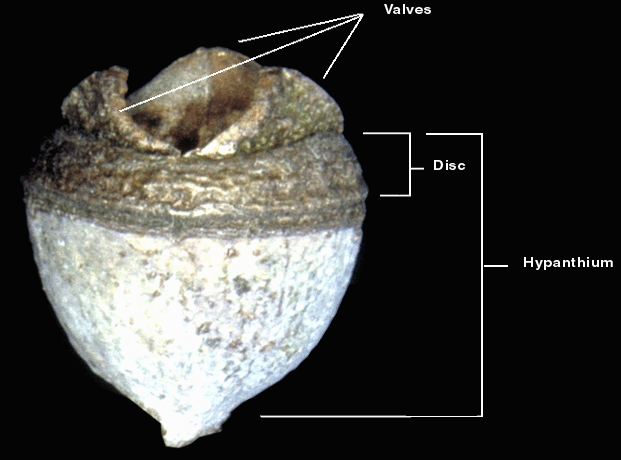
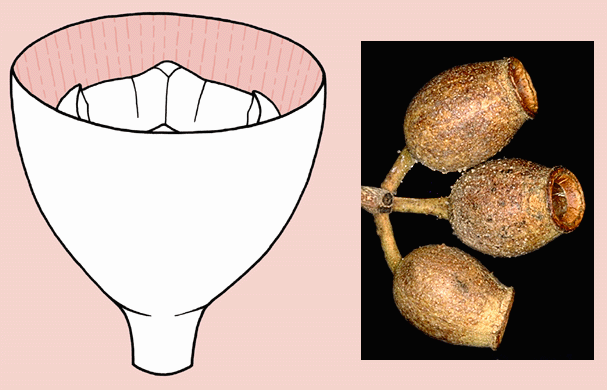
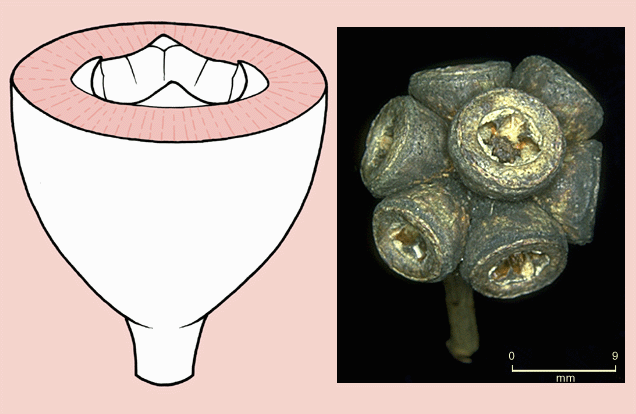
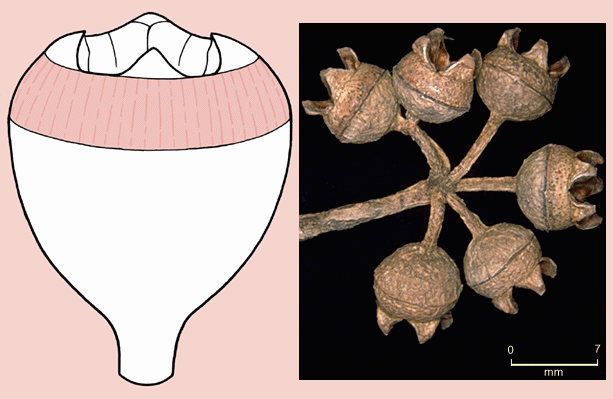
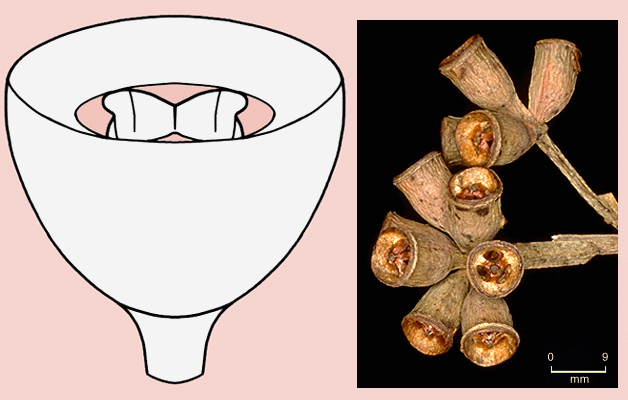
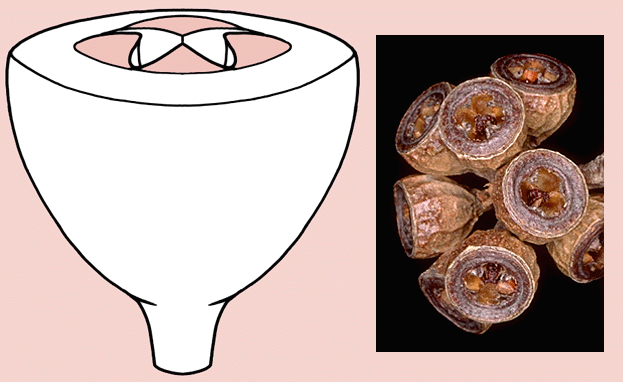
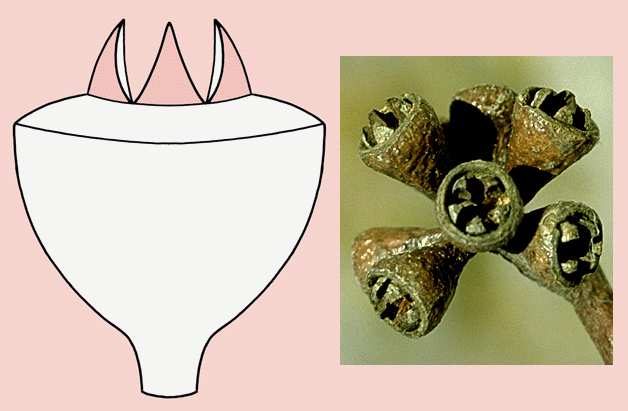
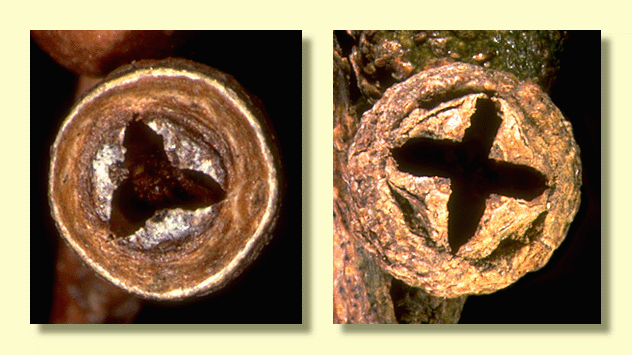
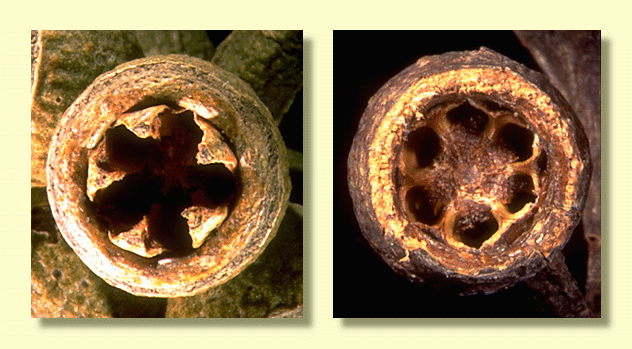
The fruits of eucalypts, commonly called the gumnuts, are a compound structure of supporting tissue, the hypanthium, and the ovary. In bud, the ovary is sunk into the invaginated top of the pedicel (individual bud stalk) known as the hypanthium. Following fertilisation, the stamens fall from the flower, the style surmounting the ovary usually sheds, and the remaining structure becomes woody and matures into the fruit. The rim of the fruit comprises the scar or circular "platform" where the operculum was attached, then on the inner side, the narrow or broad ring of tissue that bore the stamens, and finally a band of tissue that links the rim with the ovary roof. This last tissue is the disc. It may descend to the ovary and line the inner wall of the hypanthium, or cross horizontally to the ovary roof, or be raised and ascend to an uplifted ovary roof. The roof of the ovary is "free" and exposed and breaks into valves which spread and allow the seeds to shed. The mature woody ovary may be deeply sunk in the fruit and not actually be visible below the rim, be more or less level with the rim, or in other species, the roof of the ovary may be raised above the rim. Of considerable value in identification is the valves. Their number and exsertion can be characteristic of species and species groups, e.g. the red gums in which the ovary splits into 3 or 4 valves which are usually strongly exserted. Valve numbers are usually 3 or 4 in species of EUCLID, with a few exceptions where the numbers are up to 6 |