|
 |
home | glossary | about eucalypts | about EUCLID | browse species More about eucalypts |
|
Inflorescences |
|
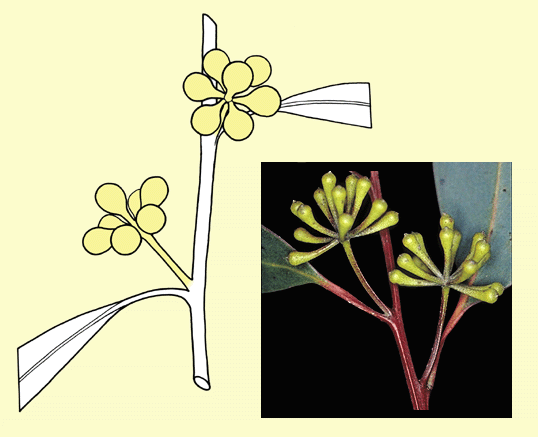
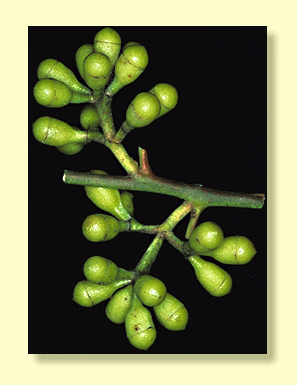
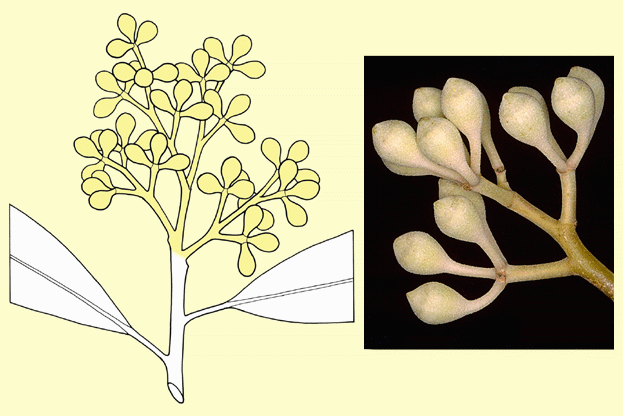
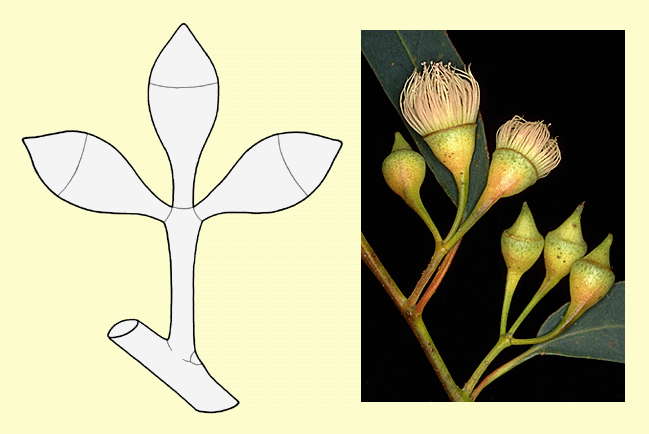
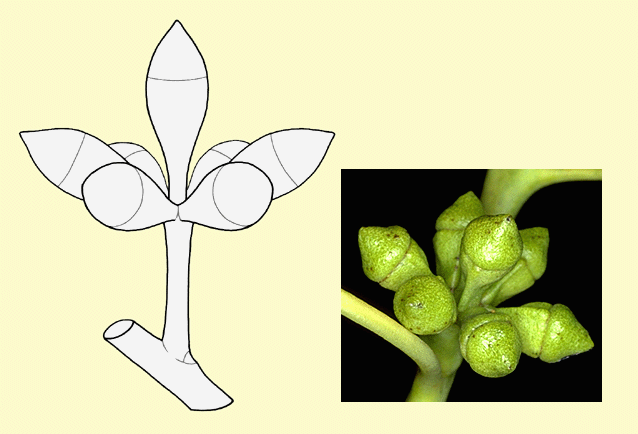
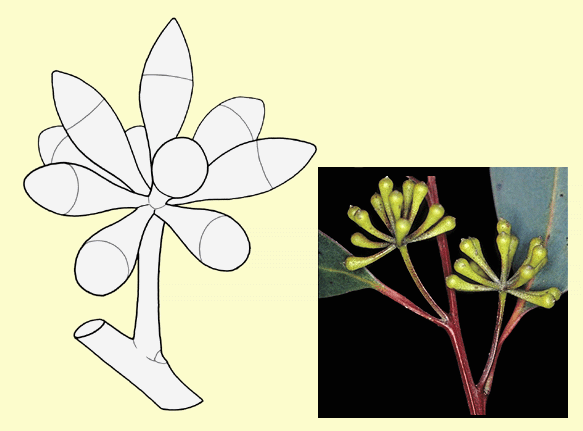
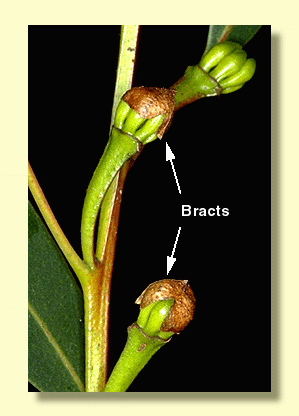
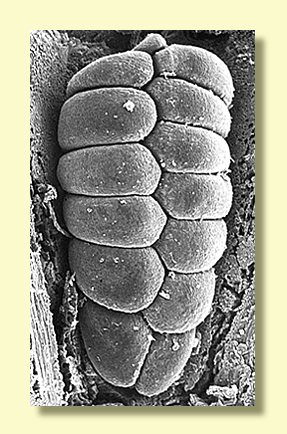
Looking beyond the leaves, the researcher then seeks the floral structures. These are traditionally the defining aspects of species. There are numerous characters associated with them. Basically there are two contrasting forms of floral architecture, the individual flower buds or flowers, and then their arrangement on the branchlets. In most species of eucalypts the buds occur in clusters on single stalks in the axils of the leaves and flowering is relatively inconspicuous. A very few species have the inflorescences in complex clusters in the axils, e.g. E. michaeliana. In contrast, several large groups, the bloodwoods, boxes and ironbarks, form the individual bud clusters in large groups at the ends of the branchlets, with few or no leaves. These result in conspicuous sprays of flowers on the outside of the crown in certain seasons. Very useful diagnostic information can be derived from these inflorescence patterns, although the structures can be modified by various external factors including predation. The bud clusters in eucalypts can be seen on close inspection to be in symmetrical patterns. A few species have a single bud in the inflorescence but the basic numbers are 3 or 7. In a 3-budded inflorescence there is a central erect bud and two subtending side buds, all in the same plane forming a "cross". A 7-budded inflorescence has a central erect bud, two subtending side buds plus two buds each subtending the side buds. Higher bud numbers form by the addition of further pairs of subtending buds, and the number of buds in an intact inflorescence is always odd, although very high bud numbers may occur in an obscured pattern. Also, in inflorescences with high numbers one of a pair of subtending buds may be suppressed, probably by compression in the very young inflorescence which is tightly held within bracts which are soon deciduous. When assessing bud numbers, the operator must take into account the fact that during inflorescence development, individual buds may be lost. This is particularly the case by the fruiting stage when the structures under examination have been exposed for a whole season and subject to various traumas including predation and simple death of individual buds.
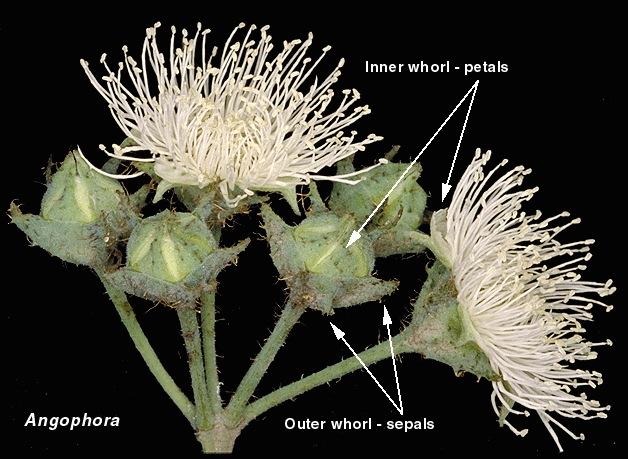
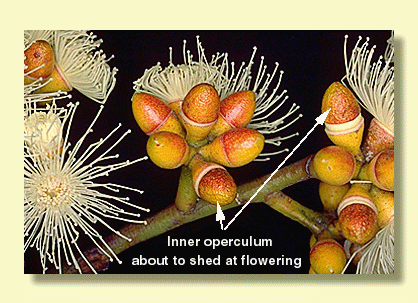
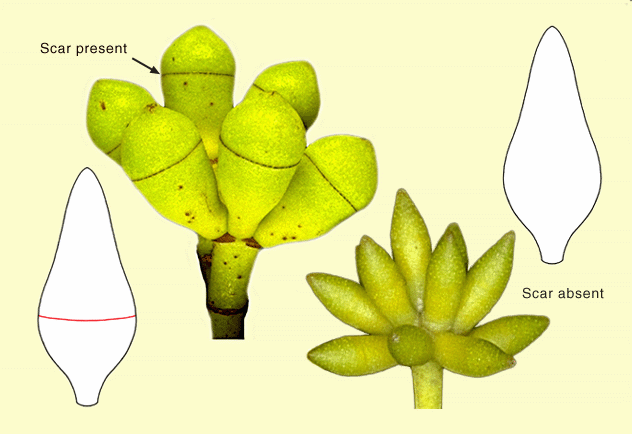
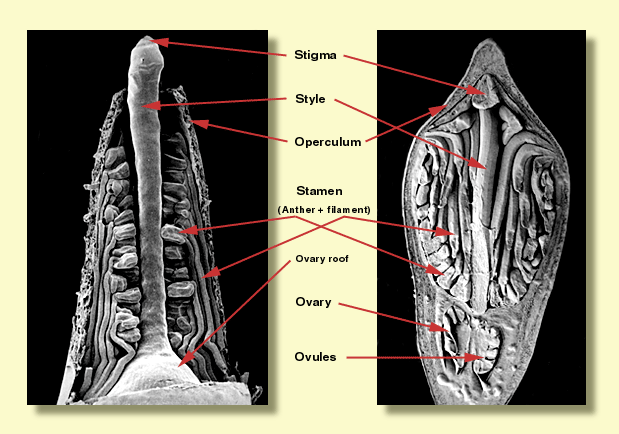
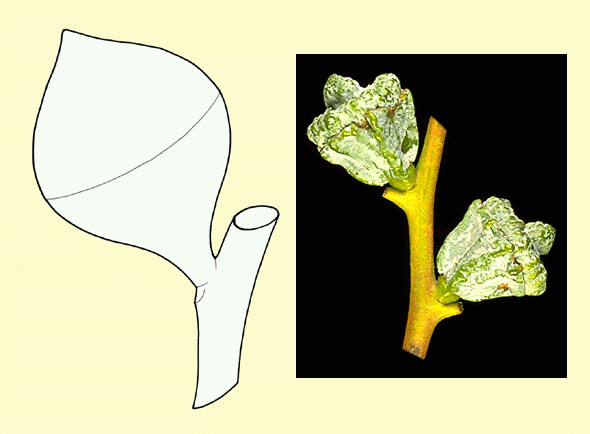
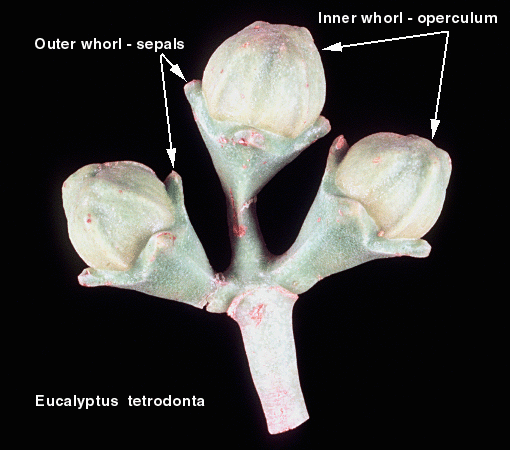
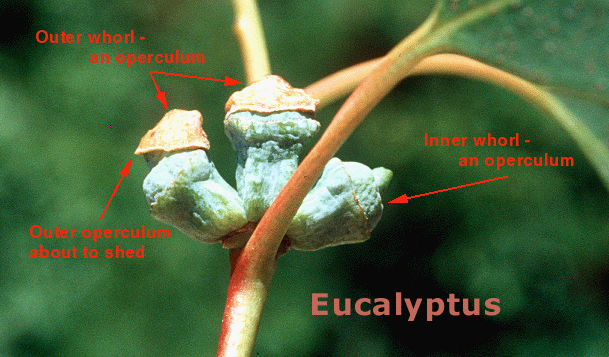
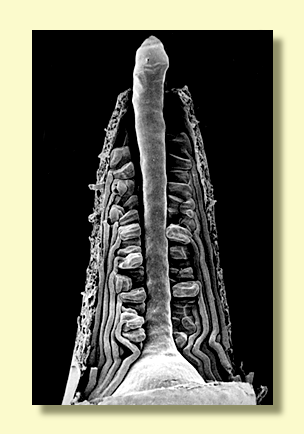
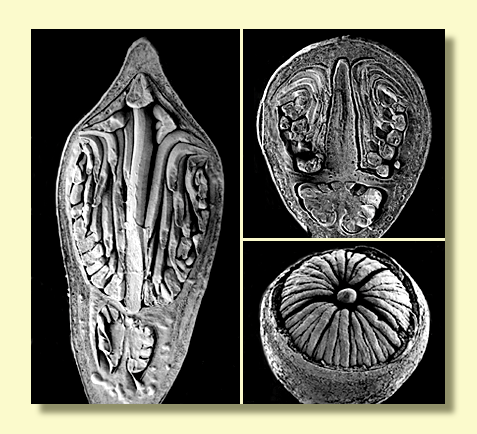
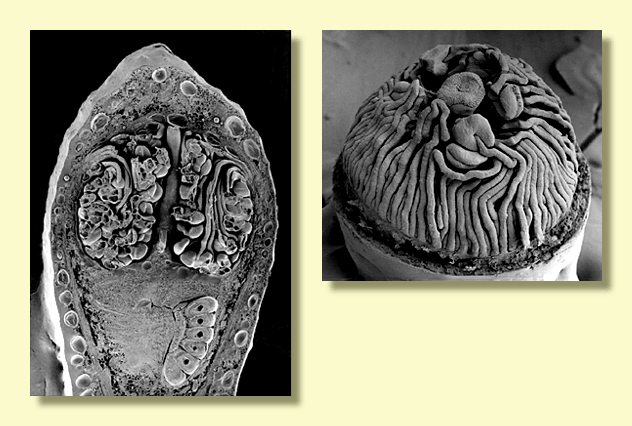
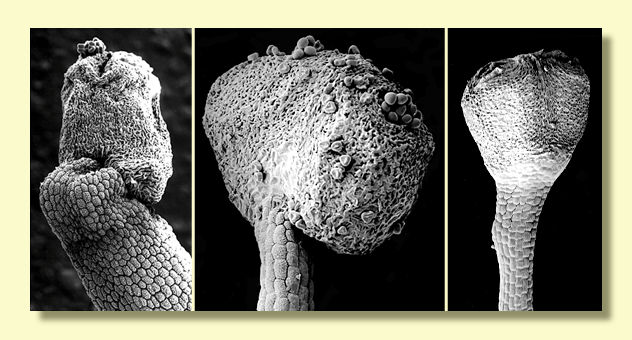
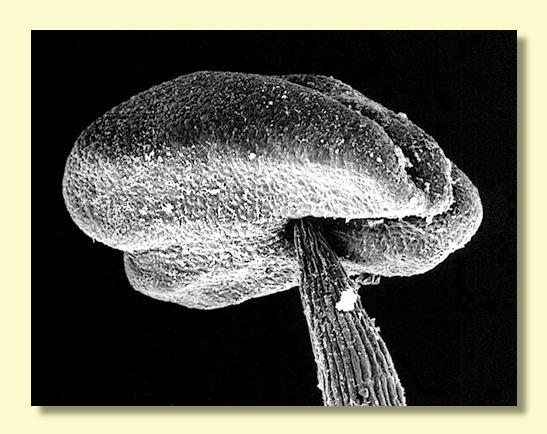
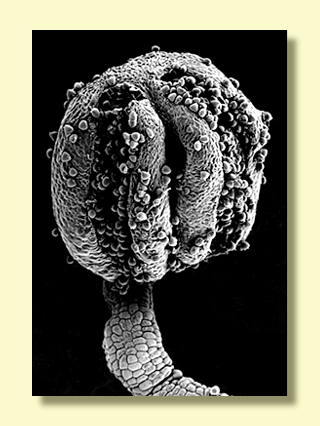
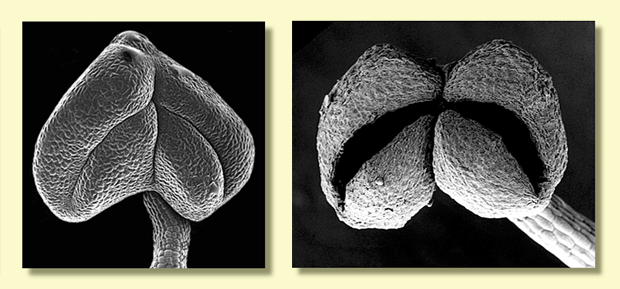
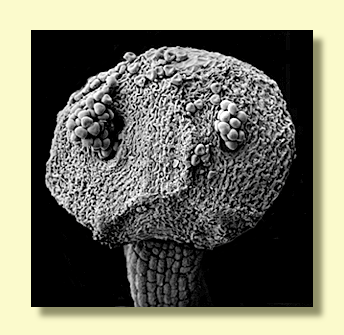
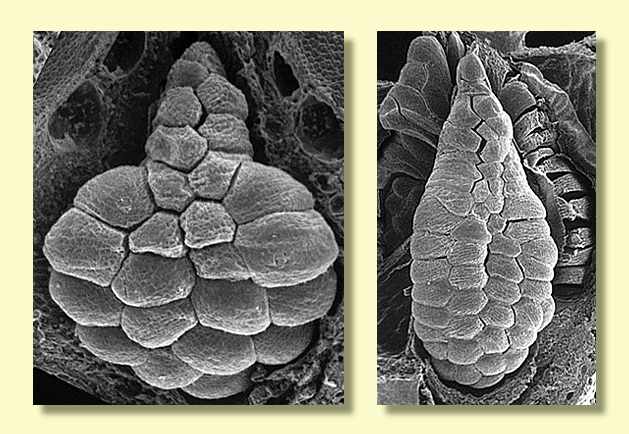
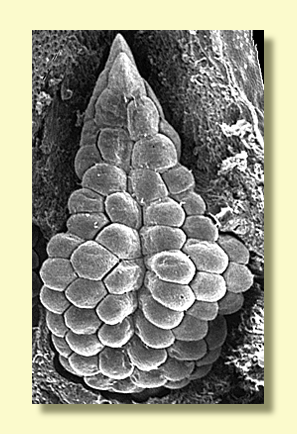
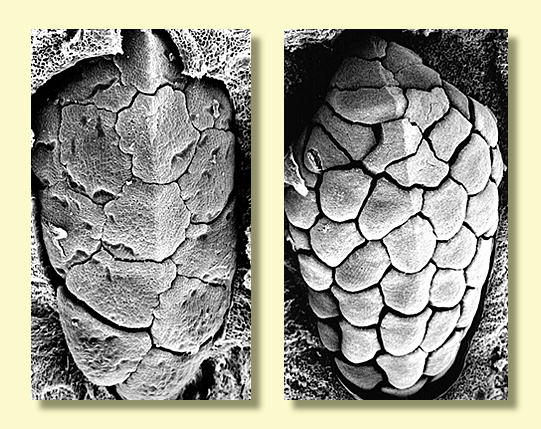
The eucalypts as recognised in EUCLID comprise the traditional eucalypts (about 750 species) and the genus Angophora. Angophora species are readily distinguished from Eucalyptus species in the flowers by the presence of petals that have a green keel and white margin, and by persistent hard, woody, green sepals (some Eucalyptus species outside the area covered by EUCLID also have sepals but none have petals). Most Angophora species also have hairs and bristle glands somewhere on the inflorescence: peduncle, pedicel, and often on the bud. The flower buds of Angophora are all very similar within the group and, apart from size, contain very few discernible characters. The individual flower buds of the traditional eucalypts, however, contain a great deal of vital information, from the external superficial nature of the wall of the bud to the characters of much higher reliability contained within. One character of absolute reliability (no exceptions have ever been found) is the number of opercula, although this requires experience to assess. The eucalypt flower lacks showy petals. The petals are in fact united very early in bud development to form a cap or a cone-shaped structure that covers the stamens and ovary during their development. This is the inner operculum, which sheds just before flowering when the stamens expand and are almost ready to shed their pollen. (There is a delay in pollen ripening and dispersal to lessen the chance of self-fertilisation and consequent inbreeding). The outer whorl of the floral parts is the sepals which, likewise, unite to form an operculum. In the majority of species the outer operculum sheds early in bud development. In doing so the tissue around the approximate middle of the bud, i.e. where the operculum attaches to the base of the bud dies and results in the detachment of the operculum. This leaves a scar around the middle of the bud which is seen with the naked eye or with a lens. A few hundred species, the monocalypts, have lost the outer operculum altogether in the evolution of the group. Therefore, throughout the development of the bud in these species there is no scar, and the side of the bud is smooth. Some species have two opercula that are fused giving the superficial impression that only a single operculum is present, or in a few species, particularly a distinctive group of boxes, the outer operculum is held until flowering and there is no scar (e.g. E. melliodora). Stamens have various forms of orientation in the unopened bud. Some species have their stamens wholly erect. Others have them uniformly inflexed, while others have irregular orientation. Again, the extremes of positioning, i.e. complete inflexion or complete erection, are easy to assess. There will be "in-between" species in which the character is difficult to categorise. The attachment of the anther on the summit of the staminal filament is useful diagnostically. Some anthers are basifixed, with the tip of the filament attached rigidly at the base of the anther; others are dorsifixed, by attachment loosely to the back of the anther. The openings (dehiscence) of the anther for pollen shed is also an important diagnostic character. Most of the eucalypts in EUCLID have their anthers opening by well separated longitudinal slits. Another large group have more or less kidney-shaped anthers with the openings oblique and touching near the apex forming confluent slits. In a third group the anthers open by small roundish pores, either at the sides or the top of the anther. Within the base of the bud is the ovary and this contains characters of high diagnostic reliability. The most useful is the number of vertical rows of ovules. These can only be seen by dissection and best done under a microscope but can be done in the field and seen with a 10× lens. Most eucalypts have ovule rows with 4 or 6 vertical rows. Another group has ovule rows consistently in 2s, while others have rows of 3 or 5, or irregular patterns. |