|
 |
home | glossary | about eucalypts | about EUCLID | browse species More about eucalypts |
|
Leaves |
|
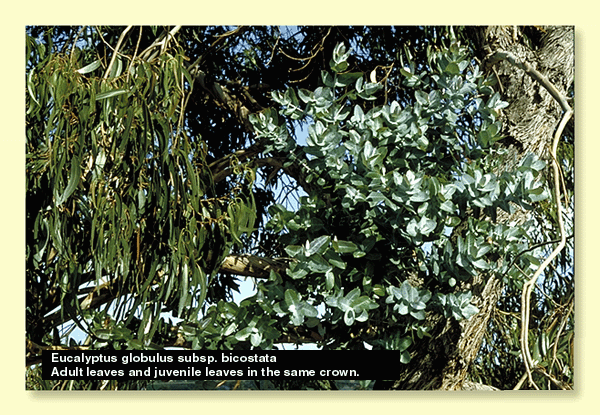
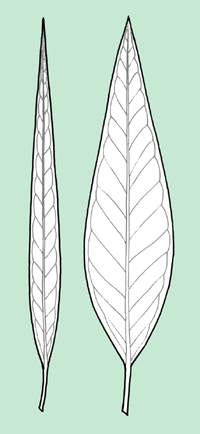
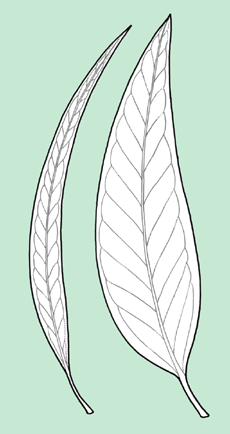
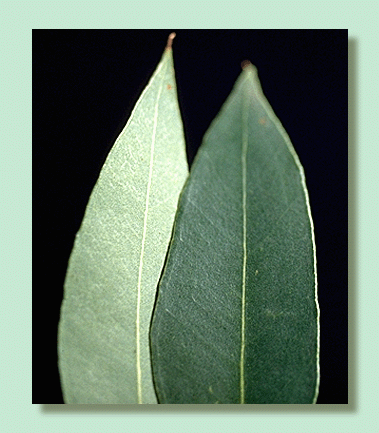
Adult leaf shape is not much use in identification as most species have lanceolate or falcate (curved) leaves. Leaf shape is a character of low reliability. Leaf size is useful if all the leaves in an adult crown are unusually small or large, as remarked above. Most eucalypt species have adult leaves that are more or less the same colour on both sides. But if an adult leaf is distinctly discolorous (the upper face is darker and greener than the lower) this is a fairly powerful tool in the discrimination of species. The discoloured appearance of the leaf is a factor of internal structure, as the green photosynthetic tissue (cells with chlorophyll-bearing chloroplasts) is near the upper surface of the leaf and is lacking towards the lower surface in this type of leaf. The discoloured appearance is maintained on fallen dead leaves although somewhat faded, and the assessment can reliably be made before sampling the living crown. Juvenile leaves in all species are usually slightly to distinctly discoloured, so care must be taken in assessment of colouration.
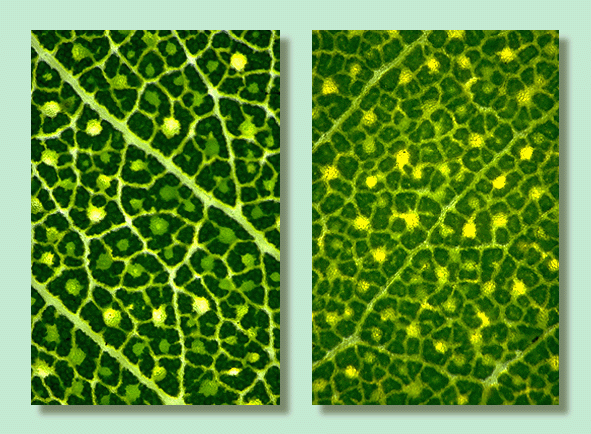
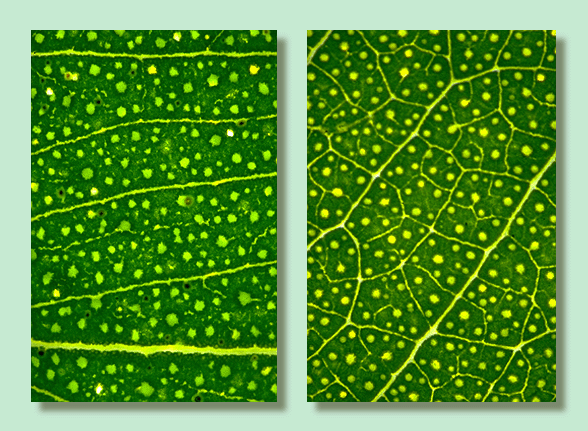
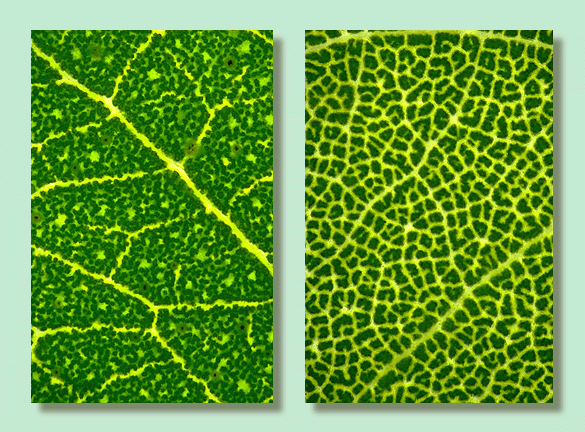
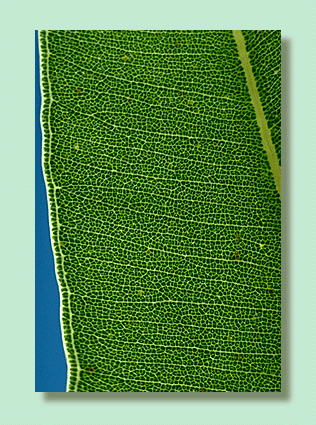
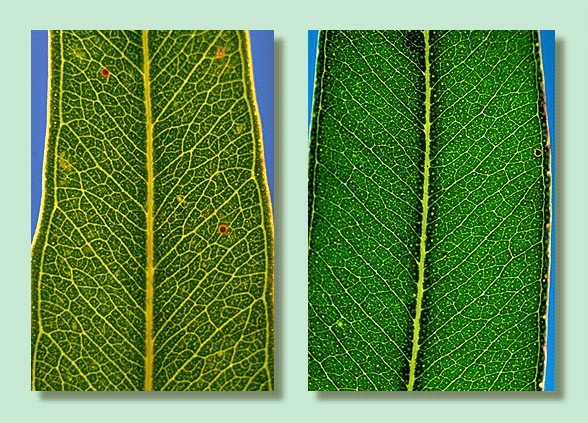
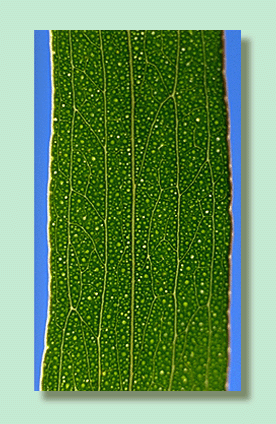
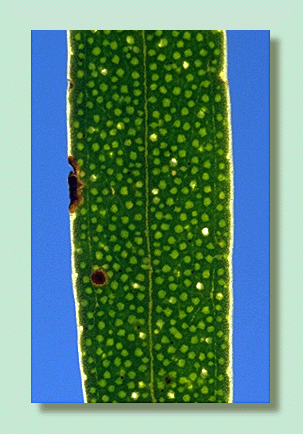
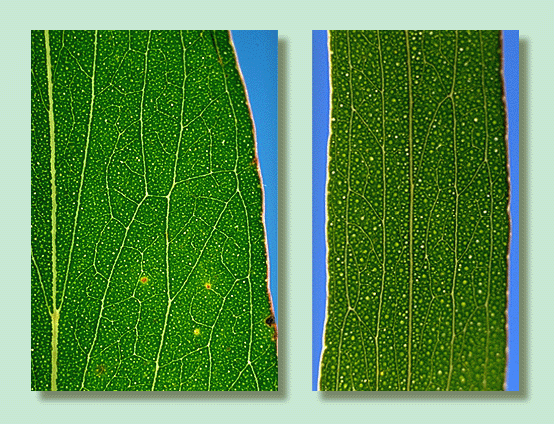
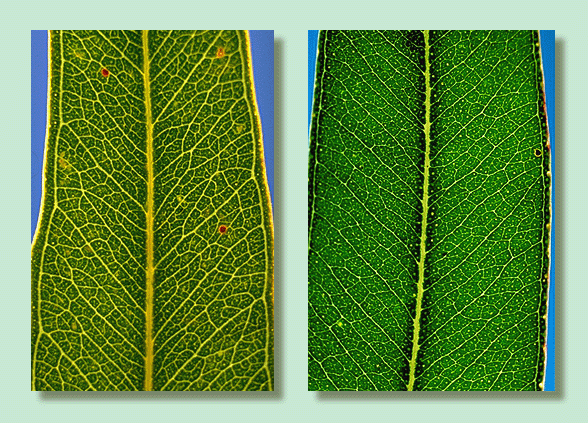
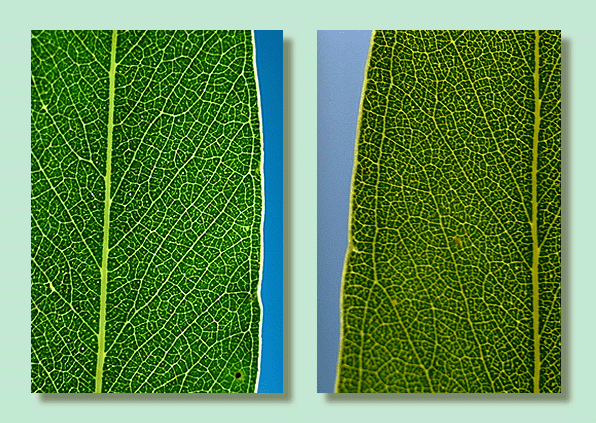
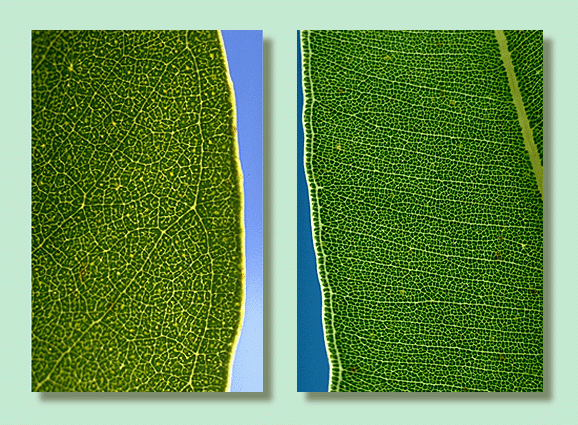
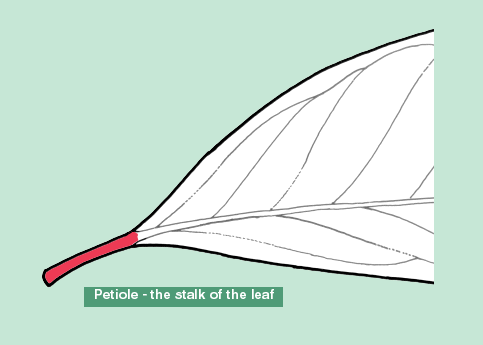
The midrib of a leaf is the primary vein, the side veins are the secondary veins. When these are the only veins apparently present or visible, there is no reticulation, a strong character in assessing leaves for identification. Tertiary veining links the side veins and forms a reticulum. Some species have quaternary veining and the reticulum is consequently very fine. There is no absolute distinction between these categories and we use the terms no visible reticulation, sparse reticulation, moderate reticulation, dense and very dense reticulation to describe them. Eucalypts are notable for the oil glands in the leaves. In a dried specimen the glands can only be seen with reflected light and appear as black dots on the undifferentiated surface. But if a fresh leaf is held up towards the sun and inspected with oblique light through the leaf, the glands will be seen as white or yellowish or green structures, obviously within the tissue of the leaf. This inspection should always be done by holding the lower leaf face towards the sun. This is to ensure comparability between specimens. Many species will show quite different patterns between top-side or under-side viewing. Because the leaves turn on their stalks and hang down in the crown, some experience is needed to determine which the upper and lower faces are. This is helped if the petiole is flattened on the upper surface, as it is in many species. Difficulty will be experienced in other species in determining the upper and lower surfaces of a leaf if the leaf stalk is slender and not flattened. In these instances both sides should be examined and the image with clearer reticulation and glands assessed. This will indicate that the upper, not the lower, side is presented towards the eye. Then comparable assessment can be made.
|