|
 |
home | glossary | about eucalypts | about EUCLID | browse species More about eucalypts |
|
Bark |
|
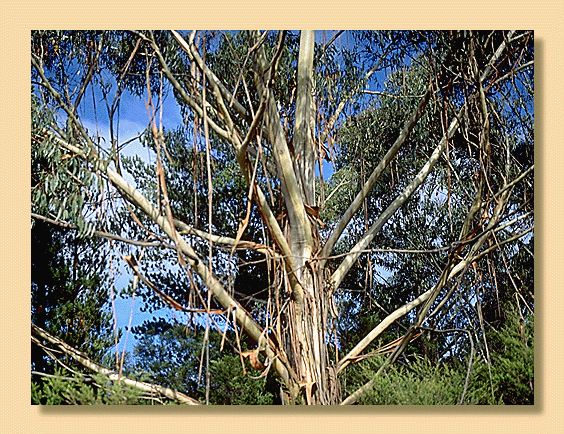
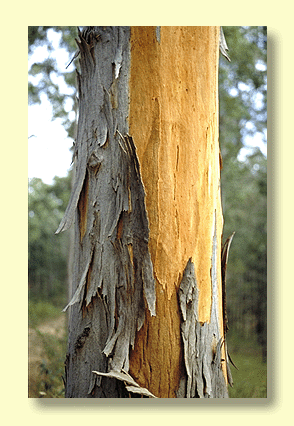
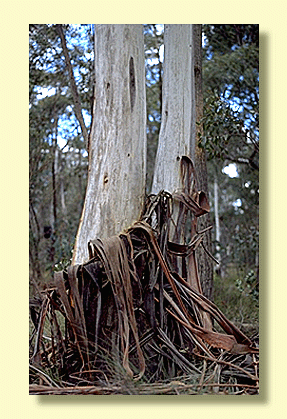
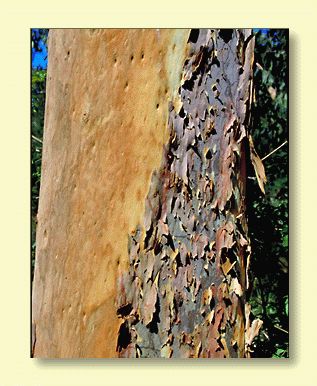
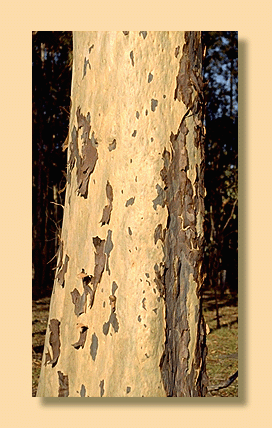
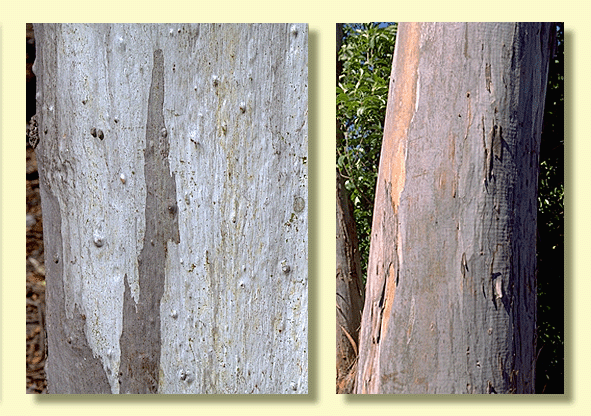
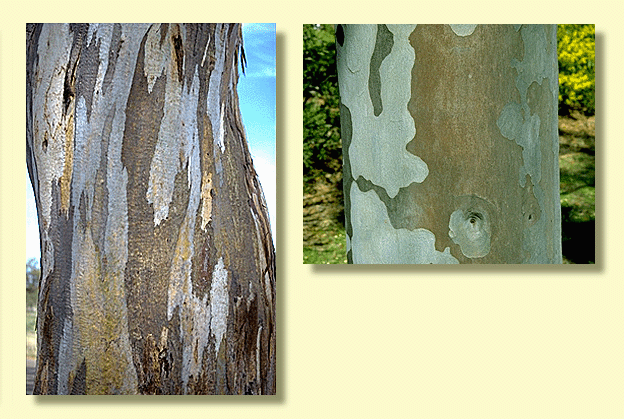
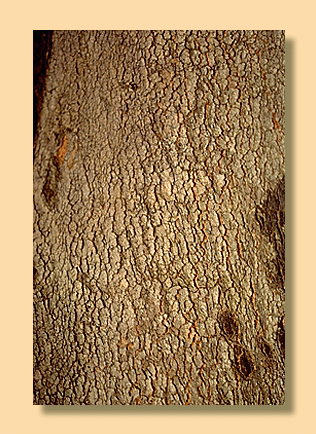
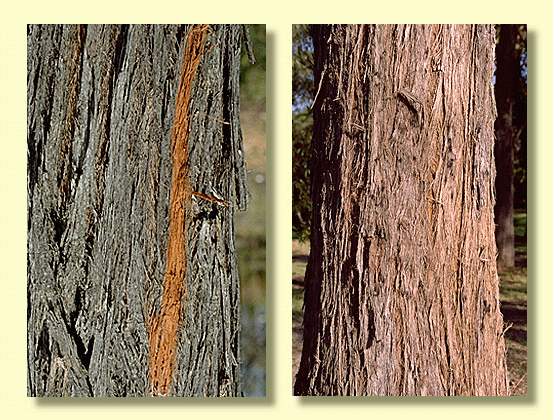
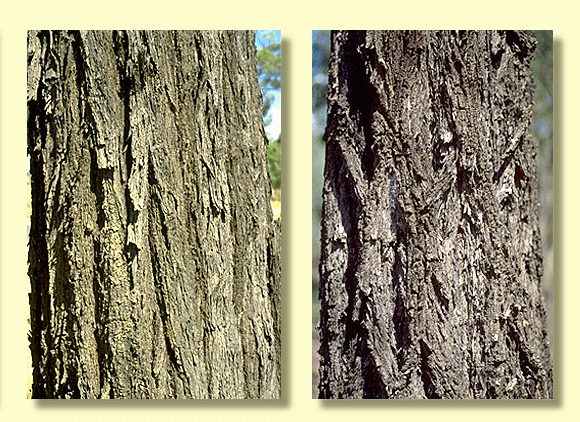
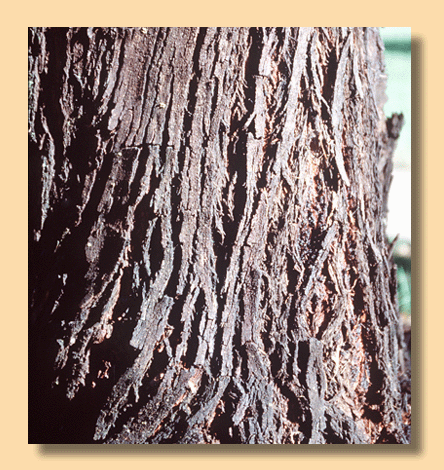
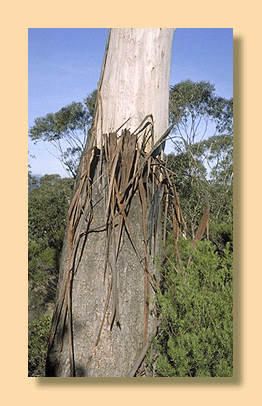
Having taken into account the habit features, the next important character to assess in eucalypts is the type of bark. It pays to think in terms of the growth processes. Each year there is an increment of living bark that results in the continual expanding girth of the tree. In all species the outermost layer dies each year. In about half of the species this dead layer completely sheds, exposing a new layer of living bark, and the process continues year after year. This group is known as the smooth barks. The dead bark may be shed from these trees in large slabs, in ribbons, or in small flakes. Invariably the newly exposed living bark is relatively smooth and brightly coloured but this fades with weathering. Often the dead bark comes off in pieces at various times of the year such that the trunk is mottled depending on the amount of time the newly revealed patches of bark are exposed to weathering.
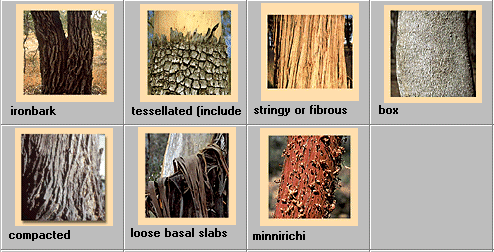
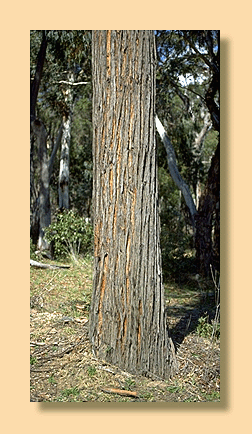
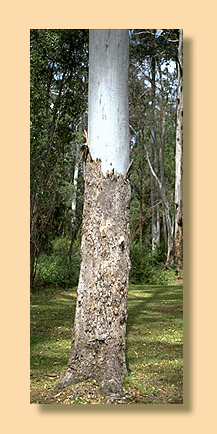
In great contrast are the remaining half of the eucalypts, the rough barks, in which the outer annual increment of dead bark simply dries out, leaving the natural fibres which do not shed and which accumulate year after year. These may remain loosely intertwined as in stringybarks or become infused with gum exudates which harden, resulting in the ironbark or compacted types of rough bark. Assessing rough bark type is the hardest part in identifying eucalypts. The rough bark may cover the whole trunk and branches, or it may shed from the branches, or from the trunk only, but to certain characteristic heights up the trunk. Consequently we refer to species as being wholly rough-barked or partly rough-barked, half-barked, or with rough bark only at the base (black butt). There will be a range of variation between trees of the same species. However, this is only part of the bark story because there are so many different types of rough bark, defined by their texture, colour and persistence on the trunk. We should conclude that bark, because of the variability and imprecision of the descriptive terms, is a feature of only medium reliability for identification purposes.
|