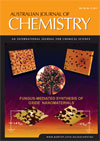
Australian Journal of Chemistry
Volume 64 Number 3 2011
RESEARCH FRONT: ICCC39 (39th International Conference on Coordination Chemistry): Bioinorganic Chemistry
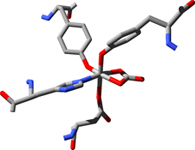
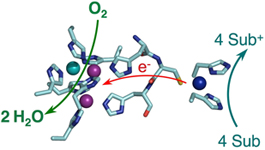
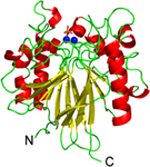
CH10428Metallo-oxidase Enzymes: Design of their Active Sites
Zhiguang Xiao and Anthony G. Wedd
pp. 231-238
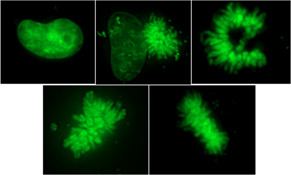
CH10365Critical Design Factors for Optical Imaging with Metal Coordination Complexes
David Parker
pp. 239-243
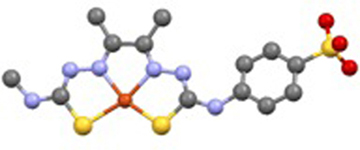
CH10463Water-soluble Bis(thiosemicarbazonato)copper(II) Complexes
Gojko Buncic, James L. Hickey, Christine Schieber, Jonathan M. White, Peter J. Crouch, Anthony R. White, Zhiguang Xiao, Anthony G. Wedd and Paul S. Donnelly
pp. 244-252
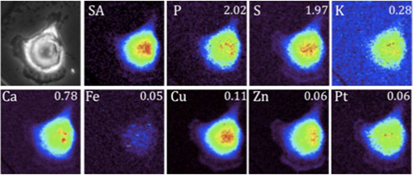
CH10453Uptake and Distribution of a Platinum(II)-Carborane Complex Within a Tumour Cell Using Synchrotron XRF Imaging
Ellen L. Crossley, Jade B. Aitken, Stefan Vogt, Hugh H. Harris and Louis M. Rendina
pp. 253-257
CH10424A Potentially Polymerizable Heterodinuclear FeIIIZnII Purple Acid Phosphatase Mimic. Synthesis, Characterization, and Phosphate Ester Hydrolysis Studies
Yoke Leng Michelle Zee, Lawrence R. Gahan and Gerhard Schenk
pp. 258-264
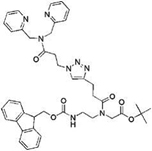
CH11010Towards the Preparation of Novel Re/99mTc Tricarbonyl-Containing Peptide Nucleic Acid Bioconjugates
Gilles Gasser, Anna M. Sosniak, Anna Leonidova, Henrik Braband and Nils Metzler-Nolte
pp. 265-272
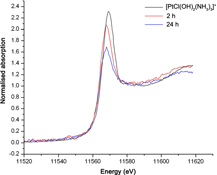
CH11041Stabilization of Triam(m)inechloridoplatinum Complexes by Oxidation to PtIV
Helen L. Daly, Matthew D. Hall, Timothy W. Failes, Mei Zhang, Garry J. Foran and Trevor W. Hambley
pp. 273-278
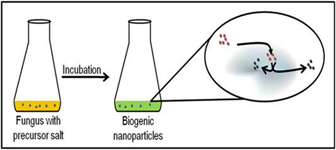
CH10343Fungus-mediated Biological Approaches Towards 'Green' Synthesis of Oxide Nanomaterials
Vipul Bansal, Rajesh Ramanathan and Suresh K. Bhargava
pp. 279-293
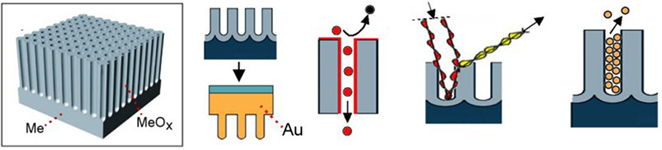
CH10398Self-ordering Electrochemistry: A Simple Approach for Engineering Nanopore and Nanotube Arrays for Emerging Applications
Dusan Losic, Leonara Velleman, Krishna Kant, Tushar Kumeria, Karan Gulati, Joe G. Shapter, David A. Beattie and Spomenka Simovic
pp. 294-301
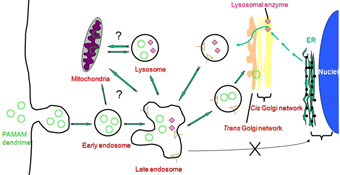
CH10358Characterization of the Uptake and Intracellular Trafficking of G4 Polyamidoamine Dendrimers
Chin-Ling Pai, Ming-Jium Shieh, Pei-Jen Lou, Fei-Hong Huang, Tzu-Wen Wang and Ping-Shan Lai
pp. 302-308
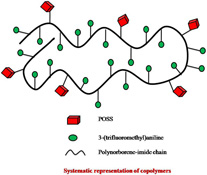
CH10367Ring Opening Metathesis Polymerization of Polyoctahedral Oligomeric Silsesquioxanes (POSS) Incorporated Oxanorbornene-5,6-dicarboximide: Synthesis, Characterization, and Surface Morphology of Copolymers
D. Gnanasekaran, K. Madhavan, John Tsibouklis and B. S. R. Reddy
pp. 309-315
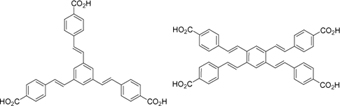
CH10374The Synthesis of Fluorescent DNA Intercalator Precursors through Efficient Multiple Heck Reactions
Nigel A. Lengkeek, Ramiz A. Boulos, Allan J. McKinley, Thomas V. Riley, Boris Martinac and Scott G. Stewart
pp. 316-323
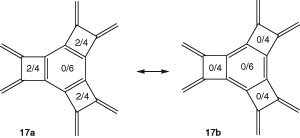
CH10384Anticipating π-Bond Dispositions in Cyclic, Even, Classical Hydrocarbons
Richard F. Langler
pp. 324-334
CH10413Why Do Some Alkoxybromothiophenes Spontaneously Polymerize?
Pawel Wagner, Kenneth W. Jolley and David L. Officer
pp. 335-338
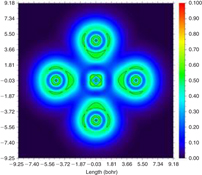
CH10373Interaction and Electron Density Properties of MKr42+ (M = Cu, Ag and Au): ab initio Calculation
Li Xinying and Cao Xue
pp. 339-344
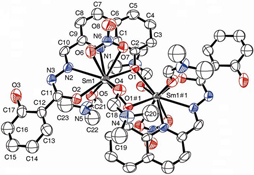
CH10302Crystal Structures, Antioxidation, and DNA Binding Properties of SmIII Complexes
Yongchun Liu, Zhengyin Yang, Kejun Zhang, Yun Wu, Jihua Zhu and Tianlin Zhou
pp. 345-354