

Australian Journal of Chemistry
Volume 65 Number 3 2012
RESEARCH FRONTS: 1. Synchrotron Chemistry; 2. ICMAT 2011
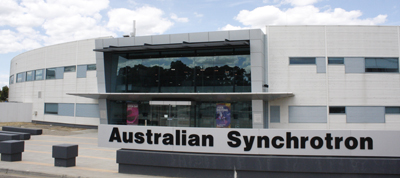
This Research Front contains a selection of papers by Australian groups that demonstrate some of the power of synchrotron radiation when applied to chemical problems. While some are more in the style of reviews and others are research articles, all give a useful perspective on how this versatile tool is a powerful weapon in the chemist's armoury.
CH11287 Synchrotron Radiation Spectroscopic Techniques as Tools for the Medicinal Chemist: Microprobe X-Ray Fluorescence Imaging, X-Ray Absorption Spectroscopy, and Infrared Microspectroscopy
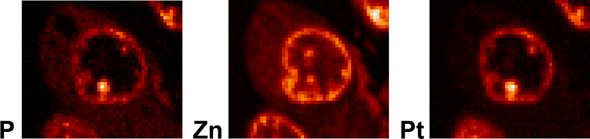
This review updates the recent advances and applications of three prominent synchrotron radiation techniques, microprobe X-ray fluorescence spectroscopy/imaging, X-ray absorption spectroscopy, and infrared microspectroscopy, and highlights how these tools are useful to the medicinal chemist.
CH11365 Synchrotron Infrared Spectroscopy of Cells and Tissue
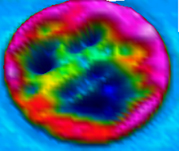
This paper reviews work carried out in the Centre for Biospectroscopy, Monash University, at the Infrared Microspectroscopy Beamline on the Australian Synchrotron since the first synchrotron light. It discusses the attributes and advantages of the beamline for chemical spectroscopy and imaging of cellular and tissue samples and briefly summarizes new techniques that will come online in the near future.
CH11313 Synchrotron X-Ray Powder Diffraction Studies of Structural Phase Transitions in Perovskite Oxides
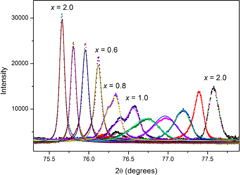
The ability of synchrotron X-ray powder diffraction measurements to establish structures of perovskite oxides is discussed using CdTiO3 and the series Ba2-xSrxInTaO6.
CH11361 A Combined Voltammetric and Synchrotron Radiation-Grazing Incidence X-ray Diffraction Study of the Electrocrystallization of Zinc Tetracyanoquinodimethane
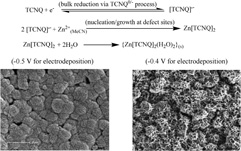
In situ synchrotron radiation X-ray diffraction has elucidated the structure of electrocrystallized zinc tetracyanoquinodimethane revealing unique morphologies that are tunable using the conditions for electrodeposition.
CH11484 X-Ray Spectroscopy and Structure Elucidation of Reactive Electrogenerated Tri-iron Carbonyl Sulfide Clusters
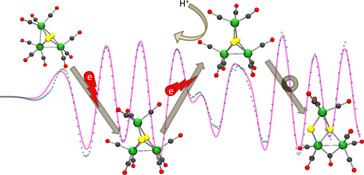
The development and application of a low-volume electrosynthesis cell for generation of XAS samples is described that has a minimum solution requirement of 0.1 mL. Structure determination of reduced tri-iron carbonyl sulfide clusters is obtained by combining the results of DFT calculation with the IR spectrum in the ν(CO) region and estimates of the iron-scatterer distances obtained using XAFS analysis. The weak electrocatalytic proton reduction exhibited by Fe3S2(CO)9 is discussed in the context of the redox-induced structural changes.
CH12002 In Situ SAXS Analysis of Interfacial Wetting on Nanorough Surfaces
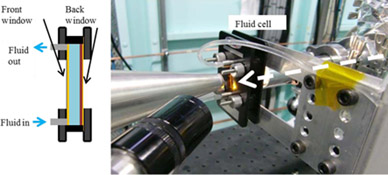
Superhydrophobic surfaces were fabricated through a nanoparticle sol-gel process in the presence of a mono-disperse latex particle. These surfaces were immersed in water and studied in situ using synchrotron small angle X-ray scattering where the percentage interface under wetting was directly quantified, highlighting the significance of hierarchical surface roughness in inhibiting wetting progression.

This Research Front comprises a selection of papers exemplifying the current trends in modern microscopy and optical methods that were presented in the Frontiers in Optical Bio-Imaging and Microscopy symposium which took place at the ICMAT 2011 conference at the Suntec Conference Centre in Singapore from 26 June to 1 July 2011.
CH11407 Chemically Specific Imaging Through Stimulated Raman Photoexcitation and Ultrasound Detection: Minireview
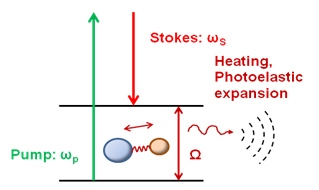
By using a pair of optical pulses, which selectively excite a vibrational transition of a molecule, energy can be transferred to a molecular system resulting in photoelastic expansion and a high-frequency ultrasound wave. Non-optical detection of such photoacoustic waves allows chemically-specific deep-tissue non-invasive imaging.
CH11432Features of Thiolated Ligands Promoting Resistance to Ligand Exchange in Self-Assembled Monolayers on Gold Nanoparticles
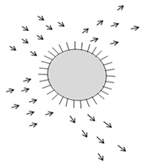
Gold nanoparticles need to be highly stable to electrolyte-induced aggregation and non-specific binding to be suitable to biological applications. The control of the resistance against ligand exchange reactions with small thiolated molecules is a straightforward way to determine the likely stability of coated gold nanoparticles in biological environments. This method provided a mean to develop and select highly resistant self-assembled monolayers made with alkane thiols and peptidols to protect gold nanoparticles.
CH11429 Synthesis of Silver Nanoparticles with Monovalently Functionalized Self-Assembled Monolayers
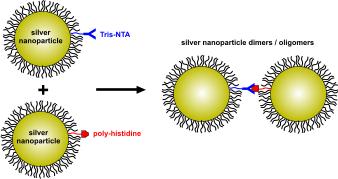
We use a combination of small peptides and short alkanethiol ethylene glycol ligands to cover silver nanoparticles and limit non-specific binding, provide good solubility and stability in physiological conditions. The stoichiometry of the nanoparticles is controlled such that dimers/oligomers of silver nanoparticles can be obtained.
CH12093 Photoconversion of Spiropyran to Merocyanine in a Monolayer Observed Using Nanosecond Pump-Probe Brewster Angle Reflectometry
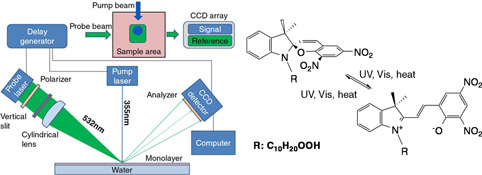
A new apparatus for nanosecond-time-resolved Brewster angle reflectometry is described that can be used to measure transient angle-resolved reflectivity changes in thin films and monolayers in a single pulsed laser shot. The system was used to observe nanosecond time-resolved photodynamics in a spiropyran monolayer at the air-water interface. After UV excitation the spiropyran converted to its merocyanine form in two stages. One within a timescale close to the instrument time resolution of a few tens of nanoseconds whereas the second stage occurred over a few hundred nanoseconds.
CH12037 Surface Modified Gold Nanorods in Two Photon Luminescence Imaging
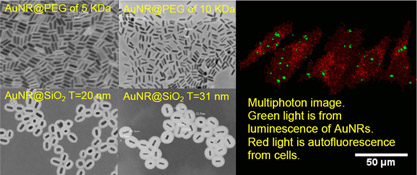
This paper elaborates on refinement of seed mediated chemical synthesis of gold nanorods using two methods to grow nanorods with aspect ratios between 2 and 4; and 4 to 4.7 respectively. Both polyethylene glycol (PEG) and silica (SiO2) were used to modify the nanorod surface and to remove the toxic surfactant, cetyltrimethylammonium bromide. Finally, PEG-coated gold nanorods with the plasmonic resonance peak at 760 nm were incubated with HeLa cells, and multiphoton luminescence imaging of the HeLa cells was performed using a customized multiphoton laser scanning nonlinear microscope with a 824 nm fs laser.
CH12070 2,2,6-Trimethyl-4H-1,3-dioxin-4-one (TMD): A Versatile Acetylketene Equivalent
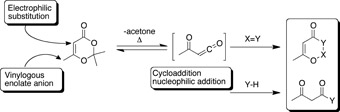
2,2,6-Trimethyl-4H-l,3-dioxin-4-one (TMD) is very stable at room temperature but decomposes when heated to ~100°C to give acetylketene and acetone. Furthermore, TMD has been extensively used as a reagent for reactions such as nucleophilic addition to provide 1,3-dicarbonyl compounds as well as electrophilic substitution, SN2 reactions, cyclocondensations, and vinylogous aldol reactions.
CH11490 2-Methyltetrahydrofuran: A Versatile Eco-Friendly Alternative to THF in Organometallic Chemistry
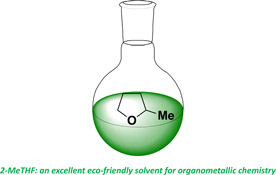
2-Methyltetrahydrofuran (2-MeTHF) is a promising biomass-derived solvent that presents several advantages over THF in organometallic chemistry. In recent years, it has been used to design eco-friendly processes and to increase the performance of a given reaction in terms of regio-, chemo-, and enantioselectivity.
CH11389 Computational Design of Thiourea-based Cyclophane Sensors for Small Anions
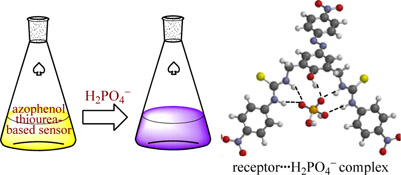
A tri-thiourea cyclophane receptor has been designed computationally for anion recognition. Calculated host–guest binding properties of this receptor indicate that it is an effective receptor for binding small halogen and Y-shaped (NO3– and AcO–) anions in the gas phase, cyclohexane and chloroform.
CH11444 Highly Monodispersed PEG-stabilized Ni Nanoparticles: Proficient Catalyst for the Synthesis of Biologically Important Spiropyrans
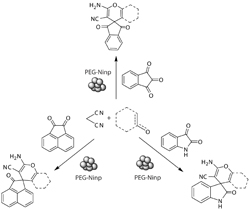
A highly efficient, economical and environmentally benign protocol for synthesizing a series of spiropyrans using PEG-stabilized Ni nanoparticles as a heterogeneous catalyst has been reported.
CH11404 Three-Membered Metal-Nucleobase-Carboxylate System Showing Interesting 2D and 3D Architecture: Synthesis, Structure, Thermostability, and Magnetic Properties
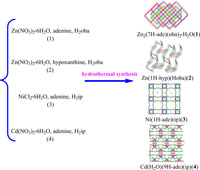
Via hydrothermal synthesis, we constructed four nucleobase-based metal-organic compounds. These polymers show novel 2D and 3D structures, such as three-interpenetrating dmp net, supramolecular zeolite-type sra net, and exceptional 2D 44 net composed of three kinds of quadrangle, observed in polymer 1, 2, and 3, respectively. Moreover, thermogravimetric studies of polymers 1, 2, and 4, and the magnetic properties of 3 are also explored.