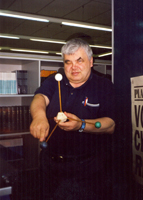
This Obituary gives an account of the life of Jan Zdysiewicz, known to most of us as John Z, former Managing Editor of the Australian Journal of Chemistry, who died in the Royal Melbourne Hospital on 10 March 2010.
The 11th Pacific Polymer Conference brought together experts in all fields of polymer science. In this issue some of the recent advances presented at the meeting are highlighted.
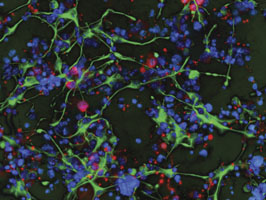
The loss of neural cells and disruption to brain circuitry following traumatic brain injury is an irreversible condition. Brain tissue engineers are researching various bioactive scaffolds that compliment cell therapies in order to create an artificial microenvironment that supports cell growth, regeneration and potentially reconnection of neural pathways. Electrospun, hydrogel and self-assembling scaffolds, and their biofunctionalisation, are prominent avenues of research presented in this article.
The present paper highlights the analogies between one of the most efficient control radical polymerization techniques, namely the reversible addition–fragmentation chain transfer process, and the polyethylene catalyzed chain growth, the only technique that can controlled ethylene polymerization through coordination chemistry under catalytic conditions.
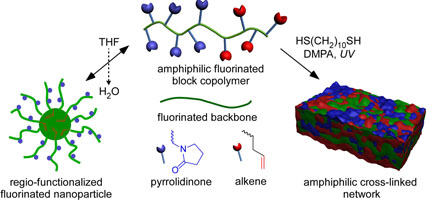
This work expands the scope of reactive, functional polymer materials by a series of versatile and orthogonal chemistries upon multi-functional monomers and polymers, including well-defined pyrrolidinone-containing amphiphilic fluoromonomers and block copolymers, and their transformation into complex solution- or solid-state nanostructures.
Two photoreactive pyridinium ylide containing monomers were synthesized and polymerized under controlled radical polymerization conditions, i.e. reversible addition–fragmentation chain transfer polymerization and nitroxide-mediated polymerization. Further, block copolymers of poly(methyl methacrylate) or polystyrene with those photoreactive monomers were successfully synthesized and their molecular weight and block ratio determined by NMR analysis.
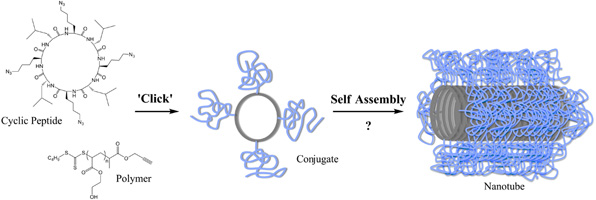
Cyclic peptide polymer conjugates were prepared by attaching polymers to a d-alt-l cyclic octapeptide ring using the Huisgen 1,3-dipolar cycloaddition (click) reaction, and evidence of self-assembly into polymeric nanotubes was observed.
The improved solubility of PMMA in alcohol/water solvent mixtures is discussed in detail, including an unexpected reversal of hysteresis for the upper critical solution temperature transition as well as the effect of polymer molar mass and concentration as well as the nature of the alcohol on the thermoresponsive behaviour.
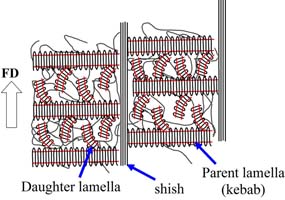
Parent–daughter (PD) lamellar branching is an intrinsic property of isotactic polypropylene (iPP) crystallization. The nature of the PD structure has been thought to influence important properties such as fatigue life and resistance to deformation. This study investigates the PD lamellae in sheared iPP during crystallization and melting using a time-resolved rheo-WAXS technique.
Radical ring-opening of four-membered 1,3-diphosphetanes appears to be a facile process of similar propensity and mechanism to that of the parent phosphetanes, but the greater kinetic stability of the diphosphetanes could make them more attractive precursors for polymerization.
Compartmentalization in nitroxide-mediated polymerization (NMP) can lead to improved control/livingness at the cost of a reduced polymerization rate (see figure). Simulations of the NMP of styrene using 2,2,6,6-tetramethylpiperidine-N-oxyl (TEMPO) and 2,2,5-trimethyl-4-phenyl-3-azahexane-3-oxy (TIPNO) reveal that similar benefits cannot be obtained in the corresponding bulk polymerizations by merely diluting the systems or by addition of extra free nitroxide.
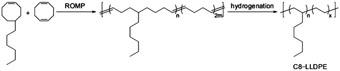
Model hexyl-branched linear low density polyethylene (C8-LLDPE) samples are synthesized by the ring-opening metathesis copolymerization of the 5-hexylcyclooct-1-ene (1) and cyclooctadiene, followed by catalytic hydrogenation of the product polymers. Such a route opens a new synthetic pathway to an array of model LLDPEs.
Stable core–shell nanoparticles with PEO corona and polystyrene core (see figure) have been synthesized by core-crosslinking of micelles using the reversible addition–fragmentation chain transfer process. The particles are stable in all solvents and are highly biocompatible. In addition, they are capable of being taken up by L929 cells.
Capillary electrophoresis (CE) has been shown to effectively separate oligoacrylates produced by reversible addition–fragmentation chain transfer (RAFT) of acrylic acid; not only according to their degree of polymerization, but also according to their tacticity. Identification by electrospray ionization mass spectrometry demonstrates that CE is well-suited to separate complex oligoelectrolytes, for example, in studies of the RAFT polymerization mechanism.
Ultrafast and reversible formation of high-molecular-weight polymer is achieved in under 3 min at 50°C by coupling Br–polystyrene–Br with itself and dinitroxide likages using the new single electron transfer–nitroxide radical coupling reactions. Using dimethyl sulfoxide as solvent and Me6TREN as the ligand for the copper species facilitated the disproportionation reaction of CuIBr to the highly activating Cu0.
An alternative to the SG1 nitroxide was targeted using structure–reactivity relationships. The substitution of the tert-butyl group from the pivalaldehyde by a 2-ethylhexyl group led to a new nitroxide that exhibited similar physical properties to SG1 (see figure). Nevertheless its efficiency to control the polymerization was lower compared to the SG1 nitroxide.
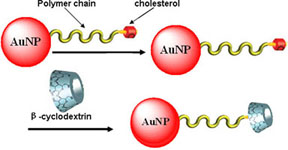
We have demonstrated a facile method for the synthesis of cholesterol terminal polyPEG acrylate using cholesterol functionalized RAFT agent. These polymers can be grafted onto gold surface via the coordination between the trithiocarbonate functionality of RAFT agent and gold surface to generate a β-CD functional surface as a precursor to creating nanoparticle – carbohydrate cluster materials.
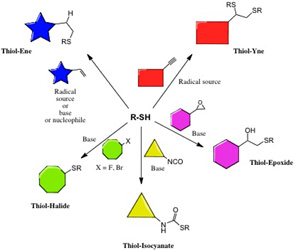
A range of thiol-based chemistries have recently emerged as powerful tools for the site-specific functionalization and synthesis of complex molecules/polymers. Herein we highlight these chemistries, including the thiol-ene, thiol-yne, thiol-isocyanate, thiol-epoxide, and thiol-halide reactions, and give recent literature examples.
In this study, a divergent synthesis of substituted pyridine-2,4(1H,3H)-diones and 4H-thiopyran-4-ones has been developed via formal [5 + 1] annulation reactions of readily available α-dimethylaminopropenoyl-α-carbamoyl ketene-S,S-acetals under varied reaction conditions. Mild conditions, simple execution, readily available substrates, good yields, and a wide range of synthetic potential of the products are the salient features of the protocol.
Several Schiff bases containing a hydroxy naphthyl moiety and substituted pyridyl groups were synthesized. The pyridyl substituted Schiff bases were isolated as a single stable tautomer at room temperature. High-resolution proton and carbon NMR spectroscopy showed that these compounds exist exclusively as keto tautomers. The Schiff bases showed extraordinary stability and did not convert to the enol tautomer even at high temperatures. Most of the compounds exhibited thermochromic properties.
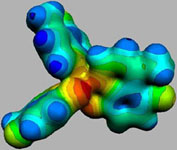
Calculation of the reorganization energy in a solvated environment for mer-Alq3 and its derivatives suggests the newly designed derivatives herein are likely to exhibit greater or comparable charge transfer properties than mer-Alq3. Additionally, some of the designed compounds are likely to have improved stability and reduced potential for oxidation.
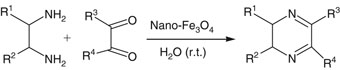
A novel, environmentally friendly procedure has been developed for the synthesis of quinoxaline derivatives in the presence of magnetic Fe3O4 nanoparticles. The reaction between 1,2-diamines and 1,2-dicarbonyl compounds was carried out in water to afford quinoxaline derivatives in high yield. Furthermore, the catalyst is stable and can be easily recovered and reused.
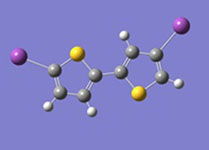
Polythiophens belong to one of the most versatile and studied families of conjugated materials. In general, conjugated polymers are a good choice for manufacturing a variety of electroactive devices such as field-effect transistors, light-emitting diodes and solar cells. This work studies from a theoretical perspective the role of alkyl and alkoxy pendant side chains on the properties of bithiophen. As a conclusion, the introduction of alkoxy chains in 3,4′-positions improves the electrical properties with respect to the bithiophen molecule and the corresponding alkyl derivatives.
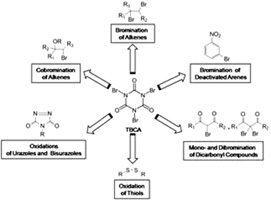
This paper provides a description of tribromoisocyanuric acid (TBCA), a new reagent used as a source of electrophilic bromine (Br+) in organic synthesis, including in Green Chemistry procedures. Its applications embrace the bromination of alkenes, β-dicarbonyl compounds and deactivated arenes, as well as oxidations of urazoles, bisurazoles, and thiols.
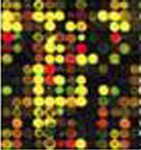
cDNA microarrays are a technique for interrogating gene expression responses to novel compounds, including chemotherapeutics. This holistic approach to gene expression measurement provides a genome wide appraisal of which molecular mechanisms are targeted by or associated with a drug.
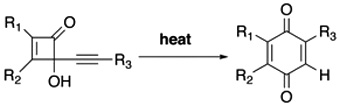
An important synthetic method providing access to a variety of heterocyclic and polycyclic quinones and hydroquinones is described. The key transformation involves the thermal ring expansion of cyclobutenedione derivatives to quinone/hydroquinone units. The synthetic utility and recent applications of this method in natural product synthesis are also discussed.
The publication rate on RAFT polymerization continues to increase with the latest publication of a third update. Freely access the three reviews previously written by CSIRO scientists Moad, Rizzardo, and Thang on this subject in Australian Journal of Chemistry.