
Australian Journal of Chemistry
Volume 64 Number 6 2011
RESEARCH FRONT: Women in Chemistry

2011 is the International Year of Chemistry. It marks a worldwide celebration of the achievements of chemistry and its contributions to the well being of humankind. The year 2011 also coincides with the 100th anniversary of the Nobel Prize in Chemistry being awarded to Madame Marie Curie. This special issue is a fitting opportunity to celebrate the contributions of women to science.
CH11182Women in Chemistry in Australia: From a Slow Start to a More Promising Future




CH11023Targeting Nucleic Acids using Dynamic Combinatorial Chemistry
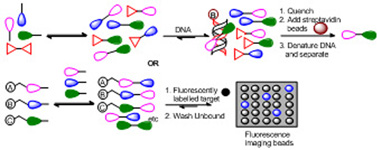
This review summarizes progress in the application of dynamic combinatorial chemistry to the molecular recognition of nucleic acids. Small molecules that interact with duplex DNA, quadruplex DNA, and RNA have been identified using solution methods and resin-bound combinatorial chemistry methods. The scope and limitations of both approaches to nucleic acids is discussed.
CH11025Mass Spectrometry for Structural Biology: Determining the Composition and Architecture of Protein Complexes
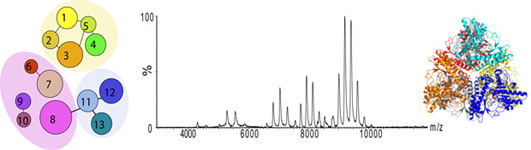
Protein–protein interactions are central to most biological processes, and represent a diverse target for modern structural biology efforts. Mass spectrometry is emerging as an invaluable tool for the analysis of intact protein complexes. This review describes the attributes of mass spectrometry for the structural investigation of multiprotein assemblies in the context of recent developments and highlights in the field.
CH11132Recent Advances in Mapping the Sub-cellular Distribution of Metal-Based Anticancer Drugs
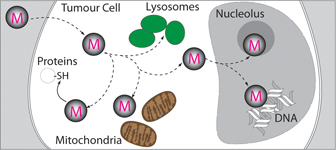
Identification of the subcellular molecular targets for metal-based anticancer drugs is becoming more and more important in the development of new drugs. Visualising the distribution of metal ions directly inside tumour cells advantageously allows observation of subtle morphological features. Herein we discuss some recent advances in imaging methods for determining the subcellular distribution of metal ions inside tumour cells, including the design of fluorescent metal complexes, recent developments in electron microscopy, and an emerging technique, Nano-scale secondary ion mass spectrometry.
CH11046Developments in Electrospray Ionization Mass Spectrometry of Non-Covalent DNA–Ligand Complexes
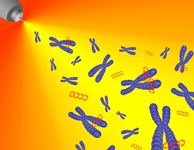
Electrospray ionization mass spectrometry (ESI-MS) is a useful technique for screening ligands that bind non-covalently to DNA. This short review describes the significance of higher-order secondary structures of DNA, considerations for experimental design, and recent ESI-MS studies of quadruplex DNA-binding ligands.
CH11039Towards Conducting Metal-Organic Frameworks
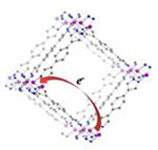
The development of conducting nanoporous materials is a highly sought after goal owing to their potential in molecular devices for applications ranging from solid-state sensing to solar energy harvesting. This highlight article introduces the emerging field and the key design features of this fascinating class of new materials.
CH10464Synthesis of an Isotopically-labelled Antarctic Fish Antifreeze Glycoprotein Probe
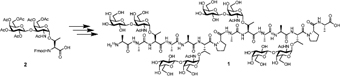
The optimized synthesis of the protected glycosylated amino acid building block 2 and its subsequent use in microwave-assisted Fmoc solid-phase peptide synthesis is reported. The glycoprotein 1 is isotopically-labelled with seven 15N-Ala residues for mass spectroscopy monitoring of in vivo studies.
CH11044Synthesis, Physical Properties, Structural, and Electrochemical Characterization of Methimidazolium and Imidazolium-based Tetracyanoquinodimethane Anion Radical Salts
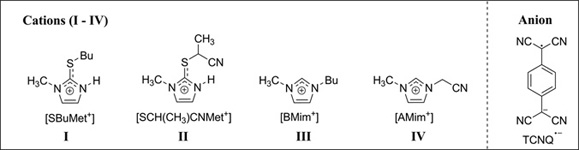
Imidazolium-based complexes derived from tetracyanoquinodimethane (TCNQ) radical anion salts are reported and the stoichiometries determined by steady-state voltammetric measurements. Two of these TCNQ salts show a protonation step, coupled to the reduced TCNQ1–/2– process. Extensive physicochemical characterization together with an X-ray crystal structure has been obtained. Atomic force microscopy data show rod-like morphology, and conductivity measurements show these salts are in the semiconducting range.
CH11065Intramolecular Hydroamination of Aminoalkenes using Rhodium(I) and Iridium(I) Complexes with N,N- and P,N-Donor Ligands
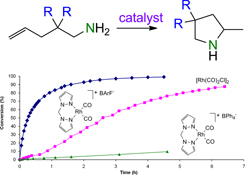
Rh(i) and Ir(i) complexes with N,N-donor ligands are highly effective catalysts for the intramolecular cyclization of aminoalkenes. The catalysis efficiency depends on the metal, the ligand, the counterion, and the size of the R substituent on the aminoalkene.
CH11069An Ab Initio Investigation of the Chain-Length Dependence of the Addition–Fragmentation Equilibria in RAFT Polymerization
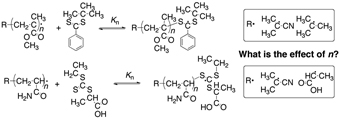
Significant and variable chain length effects on the addition–fragmentation equilibrium constant in RAFT polymerization extend to at least the trimer stage. They arise through primarily the stability of the attacking radical, but with significant contributions from homoanomeric effects and hydrogen-bonding interactions.
CH11036Structures and Anatomical Distribution of Oxygenated Diterpenes in the Australian Nudibranch Chromodoris reticulata
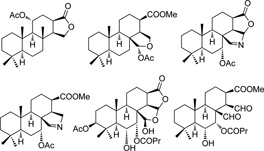
Six new diterpene metabolites have been isolated from the nudibranch Chromodoris reticulata (Chromodorididae), along with 17 known diterpenes, and their anatomical distribution investigated. Aplyroseol-2 was the major compound in the mantle tissue along with some dialdehydes, while ambliofuran was the only diterpene found solely in the internal organs. The presence of lactone-acetal-hemiacetal functionality in many of the isolated compounds is a consequence of reactive dialdehyde intermediates present in the mollusc.
CH10448Analysis of Thiol-sensitive Core-cross-linked Polymeric Micelles Carrying Nucleoside Pendant Groups using 'On-line' Methods: Effect of Hydrophobicity on Cross-linking and Degradation
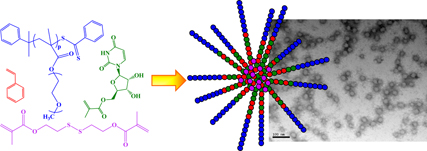
Amphiphilic block copolymers were prepared via reversible–addition fragmentation chain transfer polymerization. The structure of the hydrophobic block was altered systematically using different feed ratios of styrene and 5′-O-methacryloyluridine. The copolymer composition influenced the stability of the resulting micelle, the cross-linking kinetics (with bis(2-methacryloyloxyethyl)disulfide) and the rate of cleavage of the crosslinker.
CH11071Cancer-targeting Antibody–Drug Conjugates: Site-specific Conjugation of Doxorubicin to Anti-EGFR 528 Fab' through a Polyethylene Glycol Linker
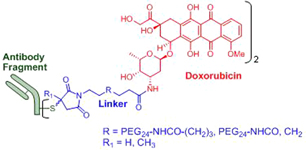
Antibody–drug conjugates of the anticancer agent doxorubicin and the cancer cell-targeting antibody anti-epidermal growth factor receptor 528 have been prepared. Methods for site-specific conjugation with different linkers between the cytotoxic drug and antibody are presented. Importantly, the antibody retains activity on conjugation, which is crucial for immunoconjugate efficacy.
CH11024Pulses for Human Health: Changes in Isoflavone and Saponin Content with Preparation and Cooking
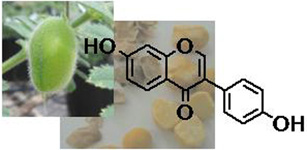
Thirteen genetically diverse varieties of pulse were studied to assess changes in concentration of isoflavones and saponins in whole seed, hydrated, and cooked seed. Interestingly, cooking processes can either increase or decrease these important secondary metabolites.
CH11062Interactions of the Antimicrobial Peptide Maculatin 1.1 and Analogues with Phospholipid Bilayers
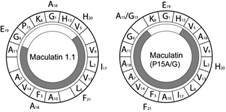
The interactions of the antimicrobial peptide maculatin 1.1 and two analogues, with model phospholipid membranes have been studied using solid-state NMR and circular dichroism spectroscopy. The peptides are highly structured in the presence of phospholipid bilayers with different effects on neutral and anionic membranes that support their preferential activity for bacterial membranes.
CH11090Ring-closing Metathesis in Peptides – the Sting is in the Tail!

Ring-closing metathesis is now a commonly employed technique for the construction of cyclic peptidomimetics. Alternating solid-phase peptide synthesis-catalysis methodology can be used to achieve high yielding carbocycle formation in aggregation-prone peptides, and regioselective installation of bridges in multi-cyclic peptides.
CH11092New 'Green' Corrosion Inhibitors Based on Rare Earth Compounds
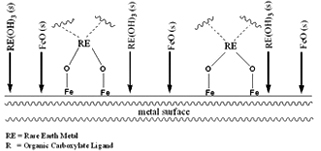
A viable alternative to the use of chromates as corrosion inhibitors has been identified with mitigation observed on steel and aluminium substrates using a variety of novel rare earth metal carboxylates and organophosphates. It has been shown that the rare earth organic complexes form a complex, nanometre thick layer on the metal substrate, which reduces the electrochemical processes associated with corrosion.
CH11031Al-doped TiO2 Photoanode for Dye-Sensitized Solar Cells
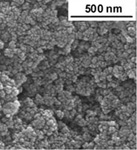
Porous aluminium doped TiO2 materials have been applied as electrodes in dye-sensitized solar cells. An enhanced open-circuit voltage was observed for these Al-doped TiO2 electrodes, which was attributed to an increase in the band-gap energy of the materials. The electrode containing 0.5 wt-% Al gave the highest overall conversion efficiency.
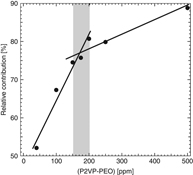
CH11066Monitoring Supramolecular Self-Assembly using Time-Resolved Fluorescence Spectroscopy
CH11102Oxidative Damage of Thymidines by the Atmospheric Free-Radical Oxidant NO3•
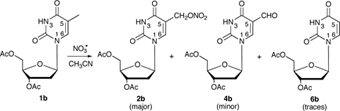
Reaction of the nitrate radical, which is the most important night-time atmospheric free-radical oxidant, with thymidines leads to oxidative damage at the methyl group at C5 and formation of nitrates and aldehydes as major products. A reaction with the 2′-deoxyribose moiety was not observed.
CH11141Dried Blood Spot Sampling – A New Approach for Whole Blood Analysis
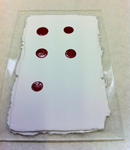
Dried blood spot (DBS) sampling has been available for many years for neonatal screening but has only recently been explored for routine bioanalysis in clinical and preclinical studies for drug development and other applications. This has driven the development of new technologies and materials for DBS sampling.
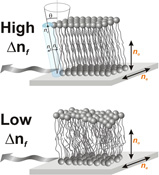
CH11027Dual Polarization Interferometry: An Optical Biosensor Which Allows New Insights into Peptide-Induced Changes in Biomembrane Structure