Australian Journal of Chemistry
Volume 65 Number 1 2012
RESEARCH FRONT: Nanomedicine
The Editor-in-Chief wishes the readers a very happy, enjoyable, and successful new year and announces the imminent appointment of four new Associate Editors.
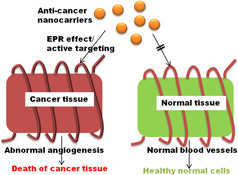
CH11372 Cancer Targeted Nanoparticles Specifically Induce Apoptosis in Cancer Cells and Spare Normal Cells
CH11370 Degradable Dextran Particles for Gene Delivery Applications
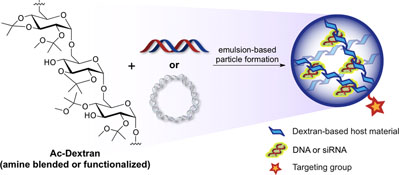
A novel particulate delivery vehicle based on the degradable biopolymer dextran was used to safely transport genetic material across cell membranes. The biocompatibility and its unique tunability differentiate this new carrier system from previous particle systems, showing high potential for the treatment of several disease models in RNA interference related applications.
CH11354 Instability of Antibacterial Serrulatane Compounds from the Australian Plant Species Eremophila duttonii
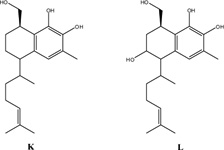
Hydrophilically substituted diterpenes of the structural class of serrulatanes have attracted attention as novel antibacterial compounds. Two highly active serrulatanes convert into orange products upon separation from the plant resin extract, and this oxidative instability may be related to the mechanism of antibacterial action.
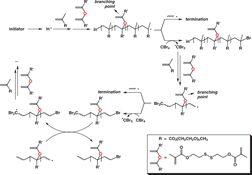
CH11376 Synthesis, Functionalization and Reductive Degradation of Multibrominated Disulfide-containing Hyperbranched Polymers
CH11292 Lipid Peptide Core Nanoparticles as Multivalent Vaccine Candidates against Streptococcus pyogenes
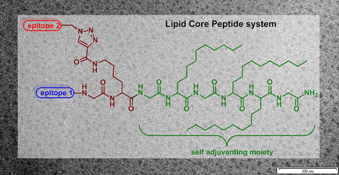
Multivalent and monovalent vaccine candidates were synthesized with the help of an azide alkyne cycloaddition (click) reaction and their ability to self-assemble under aqueous conditions was examined. The LCP conjugates possessing two different epitopes, in contrast to monoepitopic constructs, formed potentially more immunogenic small nanoparticles (5–15 nm) presumably owing to a suitable hydrophilic-hydrophobic balance of the molecules.
CH11360 Encapsulation of Superparamagnetic Iron Oxide Nanoparticles by the Supercritical Antisolvent Process
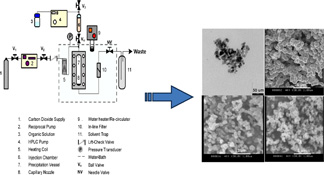
Superparamagnetic iron oxide nanoparticles (SPIONs) have gained great interest in the biomedical field due to their biocompatibility and unique magnetic properties. In this work, a green method using the supercritical antisolvent system was successfully employed to produce encapsulated SPIONs of diameters less than 200 nm with an encapsulation efficiency of 70 %.
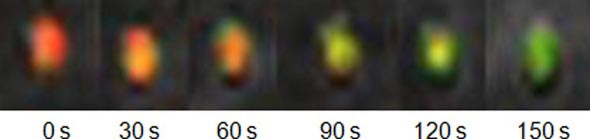
CH11311 Individual and Population Quantitative Analyses of Calcium Flux in T-Cells Activated on Functionalized Material Surfaces
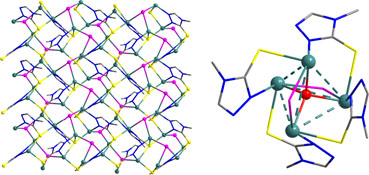
CH11261 Silver(I) and Lead(II) Halide Compounds with 4-Methyl-1,2,4-triazole-3-thiol
CH11364 Synthesis and X-Ray Crystal Structure of Cynandione B Analogues
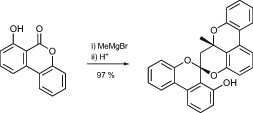
The one-step conversion of benzopyranones to the heptacyclic spiroacetal core of cynandione B using methylmagnesium bromide has been achieved. The process involves a tandem Grignard addition/aldol/spiroacetal forming reaction sequence. X-ray crystal structure analysis has established the relative configuration in these novel heterocyclic products.
CH11382 Surface State Trapping and Mobility Revealed by Junction Electrochemistry of Nano-Cr2O3
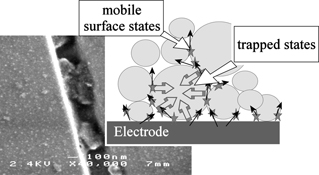
Mesoporous chromia films deposited onto 300–400-nm gap ITO junction electrodes reveal both mobile and trapped surface charges during oxidation.
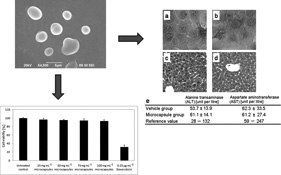
CH11386 Development of Calendula Oil/Chitosan Microcapsules and their Biological Safety Evaluation
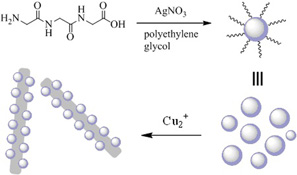
CH11250 A One-Dimensional Superstructure from the Self-Assembly of Ag Nanoparticles Induced by Cu2+ Ion Coordination
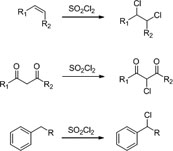
CH11381 Efficient Synthesis of 2,3-Dihydro-1H-Perimidine Derivatives Using HBOB as a Novel Solid Acid Catalyst
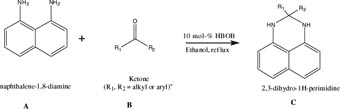
We describe a simple, efficient, and green method for the synthesis of perimidine derivatives from various ketones and naphthalene-1,8-diamine using bis(oxalato)boric acid (HBOB) as a catalyst. The methodology provides an easily handled and recyclable catalyst for this type of reaction as an alternative platform to the conventional acid-catalyzed thermal processes.
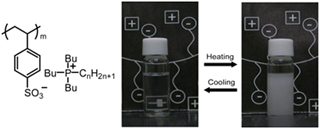
CH11378 Key Factors to Prepare Polyelectrolytes Showing Temperature-Sensitive Lower Critical Solution Temperature-type Phase Transitions in Water